


Prices in stores
No offers yet — stores have not added prices for this product yet.
Similar varieties with prices
-
UKAZ
from 210.13 €
-
 KARENIKWS
from 785.04 €
KARENIKWS
from 785.04 €
-
 SantanaKWS
from 0.34 €
SantanaKWS
from 0.34 €
-
 MadonnaNPZ Lembke
from 0.41 €per 1 kg
MadonnaNPZ Lembke
from 0.41 €per 1 kg
Production Direction
For grain
Plant Type
Leafless (tendril type)
Growing Season
70-80 days, 80-90 days
Plant: height
Average Height
Your mark
0 votes
0% positive ratings
Description
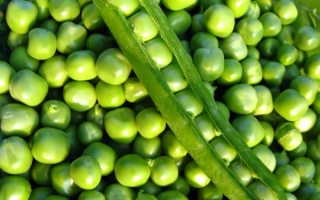
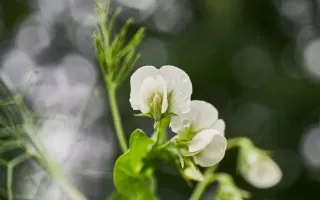
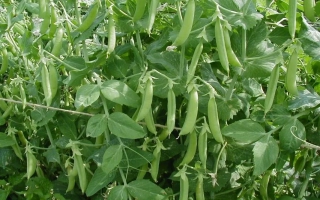
The Emily field pea variety belongs to the mid-season group with a vegetative period ranging from 64 to 92 days. Plants reach a height of 50 to 104 cm and are characterized by a leafless type. The number of nodes up to the first fertile node is average, stipules are well-developed, and mottling density is average. Flowers are white, with up to two flowers per node. Pods are straight or with very slight curvature, with an acute tip; seeds are round with yellow cotyledons and a light hilum. The weight of 1000 seeds varies from 191 to 250 grams. Emily pea is distinguished by high resistance to lodging and shattering, as well as drought resistance above average. Resistance to ascocytosis on leaves is high, while on pods and seeds it is moderate. However, the variety is highly susceptible to root rots. Average yield is 28.7 centners per hectare, which is 2.9 centners higher than the average standard, with a maximum yield of up to 64.1 centners per hectare. Protein content in seeds ranges from 24.9% to 26.6%, making this variety valuable for fodder and food purposes. The Emily variety is suitable for cultivation in various climatic conditions due to its drought and disease resistance. It can be used both in the food industry and for animal feeding, ensuring high productivity and crop quality. Due to its characteristics, this pea variety is a reliable choice for farmers seeking a stable and high-quality yield.
Crop & resistance
Crop
Disease resistance
Specifications
| Production Direction | |
|---|---|
| Plant Type | |
| Growing Season | 70-80 days, 80-90 days |
| Plant: height | Average Height |
| Beans | |
| Weight per 1000 seeds | 220-240 grams, 240-260 grams |
| Protein Content | 24-26% |
| Registration year | 2018 |
| Catalog | Catalog → Pea |
| Manufacturer | OOO 'ASK' |
| Legal data |
Show · 2
|
| Country | Russia |
No reviews yet. Be the first to share your experience.




FALENSKY ANNIVERSARY
FGBNU Federal Agrarian Scientific Center of the North-East named after N.V. Rudnitsky
034

See also
Often considered together with this variety



Recently viewed
Products you’ve viewed on this site
Reviews