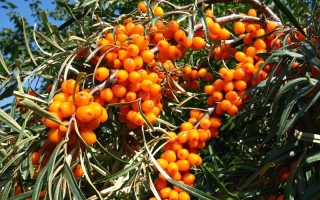
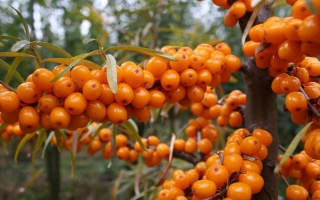
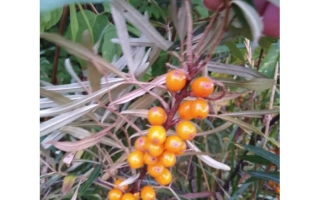
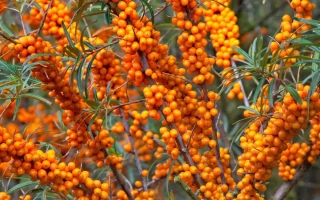
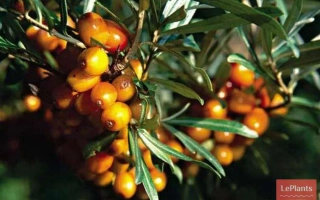
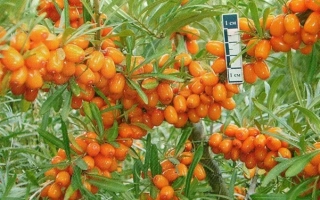
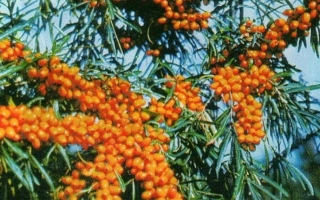
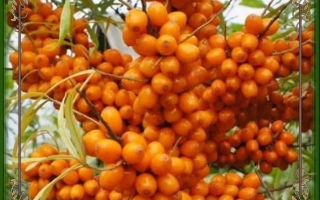
Red-seeded Hippophae (scientific name *Hippophae rufa*, also known as Shepherd's tree) – an evergreen shrub of the Barberry family, growing to a height of 1.5 to 2.5 meters. Its appearance is characterized by spiny branches and oval green leaves with a silvery tint. The berries are round, red-orange in color, 5-6 mm in diameter, typically weighing about 0.8 g, though some sources mention up to 30–40 grams. They contain more than 30% vitamin C, as well as vitamins A and P, carotene, pectin, anthocyanins, and flavonoids, making them a valuable source of antioxidants and immune-strengthening substances.
For growing Hippophae, sandy and rocky soils with good drainage are preferred; the plant withstands frost down to -45 °C, making it suitable for northern regions. The plant begins to bear fruit within 1–3 years after planting, and yields can reach 10–20 kg per bush. The fruiting period occurs in August–September; after frost, the berries become especially sweet and aromatic.
Care of the shrub includes regular watering – young plants require 1–2 times a week, while mature plants need minimal watering, though additional watering up to 2–3 times a week may be necessary during drought. It is necessary to prune dry branches and shape the bushes for easy harvesting. Fertilization is carried out with nitrogen fertilizers in spring, potassium-phosphorus in summer, and organic fertilizers in autumn. For fruiting, both male and female plants are required; one male bush can pollinate 5–7 female bushes.
Hippophae is widely used in cooking and medicine: berries are consumed fresh, boiled (mors, compote, jams), and also used for producing oils, cosmetics, and medicinal preparations. Due to its high vitamin and antioxidant content, it strengthens immunity, improves vision and cardiovascular function, has a diuretic effect, and can support health during colds.