


SKU #71880
·
57 views
BRYANSK SEED LUPIN
Lupin
User rating
0 votes0% positive reviews
No ratings yet — be the first.
Usage
Cover Crop
Green Mass Yield (t/ha)
38.1
Registration year
2017
Prices in stores
from1.07 €per 1 kg
pack from 1.07 € per 1 kg
2 offers from 1 store
Store offers · 2 from 1 stores
Prices are updated on loadLoading offers…
Available at: Геліос
Aggregator catalog: prices are collected automatically from store websites, normalized by AI and converted at the current exchange rate. Before ordering, confirm the price and availability on the store's website. This block is not indexed by search engines — the data is loaded after the page opens.
About product

An optimal solution for soil nitrogen enrichment, featuring a green mass yield of 38.1 t/ha and high resistance to Fusarium.
Usage
Cover Crop
Green Mass Yield (t/ha)
38.1
Registration year
2017
Description
Technical profile of the 'Bryansky Kormovoy' lupin
This variety, developed by the V.R. Williams FRC Fodder Institute, is a narrow-leaf lupin optimized for intensive agricultural environments with a focus on phytosanitary and green manure functions. The primary engineering goal of this variety is the rapid accumulation of biomass to restore soil fertility.
Biomass and Agrotechnological Potential
The key productivity index is 38.1 t/ha of green mass. High vegetative density makes this variety an optimal solution for incorporation into the soil as green manure. Atmospheric nitrogen fixation by nodule bacteria, which are symbiotically linked to the root system of this lupin, allows for a significant reduction in mineral nitrogen fertilizer requirements for subsequent crops in the rotation.
Phytopathological Resistance
A critical node in the variety's breeding is its immunity to Fusarium. In high-soil-moisture conditions where other legumes are prone to root rot, 'Bryansky Kormovoy' maintains the viability of its vegetative organs. This ensures consistent green mass yield, eliminating the risk of lodging or crop degradation due to fungal infections.
Application Recommendations
- Maximum efficiency is achieved when used as an intermediate crop to improve soil structure.
- The variety is not demanding regarding soil texture, though it performs best on sod-podzolic soils with a near-neutral pH.
- Consistent nitrogen accumulation in the soil following biomass decomposition makes this variety an essential tool for organic farming systems.
Crop & resistance
Crop
Disease resistance
Specifications
| Usage | |
|---|---|
| Green Mass Yield (t/ha) | 38.1 |
| Registration year | 2017 |
| Catalog | Catalog → Lupin |
| Legal data |
Show · 1
|
| Country | Russia |
Not yet комментариев. Be the first!

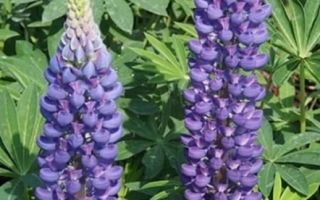
Lupinus polyphyllus
Volyn State Agricultural Experimental Station
056 3 offers
1.14 €per 1 kg ≈ 59 ₴


See also
Often considered together with this variety





Recently viewed
Products you’ve viewed on this site
Reviews · 0