
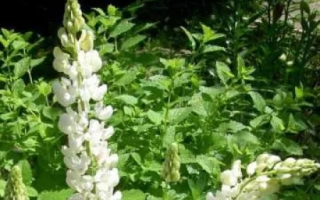

SKU #74427
·
50 views
Lupin Fog
Lupin
User rating
0 votes0% positive reviews
No ratings yet — be the first.
Usage
On green feed
Registration year
2002
About product

A proven choice for intensive production of high-quality green mass with significant nutritional value.
Usage
On green feed
Registration year
2002
Description
Focusing on Green Mass: Field Experience with «Tuman» Lupin
When planning a forage base, it is crucial to understand how a crop behaves in field conditions. The «Tuman» variety, developed by the Institute of Agriculture of the NAAS, is a practical tool for those focused on intensive green fodder production. Unlike grain-oriented varieties, the emphasis here is on biomass, and from an operator's perspective, this brings specific operational advantages and considerations.
Field Operations
Sowing «Tuman» is predictable: seedlings emerge uniformly, which simplifies planter calibration. The crop rapidly gains vegetative mass, closing the rows quickly, which reduces the need for extra herbicide passes—this translates into genuine fuel and chemical savings. The lupin is not particularly demanding, but it requires strict adherence to mowing schedules. If you miss the budding phase, the stems harden, reducing nutritional value and putting increased load on machinery during harvest.
Harvesting Insights
This variety is well-suited for forage harvesters as it forms a tall, leafy stand. However, keep in mind that with the high moisture content of the green mass, monitoring the sharpness of the chopper knives is essential. The fibrous structure requires sharp cutting edges; otherwise, fuel consumption increases while the quality of the chop degrades. Proper maintenance of the chopping unit and precise gap settings ensure a consistent cut that livestock consumes with minimal waste.
- High protein yield when mowed at the optimal development stage.
- Effective weed suppression due to vigorous early growth.
- High adaptability to Ukrainian soil and climatic conditions.
- Low requirement for fungicide applications when standard agricultural practices are followed.
Crop & resistance
Crop
Specifications
| Usage | |
|---|---|
| Registration year | 2002 |
| Catalog | Catalog → Lupin |
| Legal data |
Show · 1
|
| Country | Ukraine |
Store offers
Prices are updated on loadLoading offers…
Aggregator catalog: prices are collected automatically from store websites, normalized by AI and converted at the current exchange rate. Before ordering, confirm the price and availability on the store's website. This block is not indexed by search engines — the data is loaded after the page opens.
Not yet комментариев. Be the first!



See also
Often considered together with this variety






Recently viewed
Products you’ve viewed on this site
Reviews · 0