


SKU #74447
·
57 views
Industrial
Lupin
User rating
0 votes0% positive reviews
No ratings yet — be the first.
Usage
On green feed
Registration year
1991
About product

A reliable choice for stable green fodder production and enhancing crop rotation efficiency.
Usage
On green feed
Registration year
1991
Description
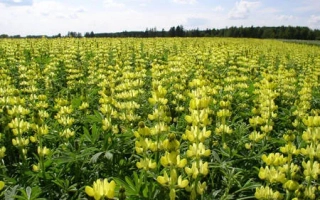
Focusing on Green Matter: “Industrialnyi” Lupin
In the domestic selection segment, the “Industrialnyi” narrow-leaf lupin variety holds a niche as a specialized crop oriented toward producing high-quality protein raw materials. Developed by scientists at the Institute of Agriculture of Polissya (UAAS), this variety was designed to meet the demands of farmers seeking a reliable source of green fodder in temperate climates.
Agronomic Profile and Purpose
The variety's core specialization is the formation of abundant vegetative mass. Unlike grain-focused lupin varieties, where selection efforts prioritize seed yield, “Industrialnyi” is adapted to the needs of the livestock sector:
- An optimal ratio of leaf surface to stem, ensuring high nutritional value of the feed.
- High growth dynamics during early development phases, allowing for efficient use of spring moisture.
- Strong responsiveness to agronomic practices aimed at maximizing the yield of feed units per hectare.
The variety's reputation is built on its stability in the field. It demonstrates classic adaptability traits for Polissya lupins, showing robustness in light-textured soils. This makes it a strategically important tool for improving soil structure and nitrogen fixation within Ukrainian crop rotations.
Market Position
Today, “Industrialnyi” remains highly sought after by farms practicing intensive livestock production that require a budget-friendly yet effective method to provide cattle with plant-based protein. It is a choice for those who value time-tested breeding work, where the priority is the productivity of the green conveyor rather than mere grain harvest figures.
Crop & resistance
Crop
Specifications
| Usage | |
|---|---|
| Registration year | 1991 |
| Catalog | Catalog → Lupin |
| Legal data |
Show · 1
|
| Country | Ukraine |
Store offers
Prices are updated on loadLoading offers…
Aggregator catalog: prices are collected automatically from store websites, normalized by AI and converted at the current exchange rate. Before ordering, confirm the price and availability on the store's website. This block is not indexed by search engines — the data is loaded after the page opens.
Not yet комментариев. Be the first!




See also
Often considered together with this variety






Lupinus polyphyllus
Volyn State Agricultural Experimental Station
056 3 offers
1.14 €per 1 kg ≈ 59 ₴


Recently viewed
Products you’ve viewed on this site
Reviews · 0