
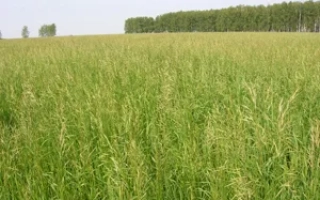


SKU #71427
·
56 views
SVERDLOVSKY 38
Brome Grass
User rating
0 votes0% positive reviews
No ratings yet — be the first.
Assignment
For Hay
Hay Yield (t/ha)
4-6
Registration year
1971
Prices in stores
from6.18 €per 1 kg
pack from 6.18 € per 1 kg
1 offer from 1 store
Store offers · 1 from 1 stores
Prices are updated on loadLoading offers…
Available at: Свое Фермерство · Agropole
Aggregator catalog: prices are collected automatically from store websites, normalized by AI and converted at the current exchange rate. Before ordering, confirm the price and availability on the store's website. This block is not indexed by search engines — the data is loaded after the page opens.
About product

A resilient bromegrass variety designed for reliable long-term hay production with yields up to 6 tons per hectare.
Assignment
For Hay
Hay Yield (t/ha)
4-6
Registration year
1971
Description
Breeding legacy and adaptation
The bromegrass variety "Sverdlovsky 38" is a product of comprehensive research conducted by the Ural Federal Agrarian Research Center. Designed to thrive in demanding agricultural zones, this variety addresses the need for robust forage crops in regions with harsh winters and unstable weather patterns. The genetic foundation is supported by international cooperation, ensuring the cultivar maintains high performance despite diverse environmental stresses.
Productivity and farm performance
"Sverdlovsky 38" is primarily engineered for hay production, offering consistent yields between 4 and 6 tons per hectare under proper management. Its architecture allows for rapid regrowth after mowing, which is a critical feature for producers aiming to maximize the number of harvests per season. The plant's vigor contributes to a dense stand that effectively suppresses weeds and retains soil moisture.
Market positioning
In the perennial grass market, this variety is valued for its predictability and resilience. Farms that specialize in livestock production frequently select "Sverdlovsky 38" when establishing long-term hayfields that require minimal maintenance but guarantee stable tonnage. It represents a reliable investment for soil conservation and forage security.
- Primary use: High-quality hay production.
- Yield potential: 4–6 tons of hay per hectare.
- Application: Suitable for long-term hayfields and pastures in cool-temperate climates.
- Key traits: Excellent winter hardiness and fast biomass recovery.
Crop & resistance
Crop
Specifications
| Assignment | |
|---|---|
| Hay Yield (t/ha) | 4-6 |
| Registration year | 1971 |
| Catalog | Catalog → Brome Grass |
| Legal data |
Show · 3
|
| Country | Russia |
Not yet комментариев. Be the first!
Alternatives
Brome Grass · similar varieties






See also
Often considered together with this variety



Recently viewed
Products you’ve viewed on this site
Reviews · 0