


SKU #43869
·
60 views
Barbara
Feed Beet
MARIBO SEEDUser rating
0 votes0% positive reviews
No ratings yet — be the first.
Direction
Recycling
Registration year
1995
About product

Barbara sugar beet is a high-yielding and valuable feed crop for livestock such as pigs, goats, sheep, rabbits, and cattle. This variety is characterized by its high content of nutrients, including protein and fiber, as well as a significant level of sugar, which enhances the nutritional value of the roots. Barbara is well-adapted to cultivation on loamy-sandy soils with an optimal pH level around…
Direction
Recycling
Registration year
1995
Description
Barbara sugar beet is a high-yielding and valuable feed crop for livestock such as pigs, goats, sheep, rabbits, and cattle. This variety is characterized by its high content of nutrients, including protein and fiber, as well as a significant level of sugar, which enhances the nutritional value of the roots. Barbara is well-adapted to cultivation on loamy-sandy soils with an optimal pH level around 6.0 and requires adequate levels of phosphorus, potassium, and humus to achieve maximum yield.
Agronomic features of this variety include planting after winter cereals, corn, potatoes, and annual grasses. During cultivation, soil preparation, fertilizer application, crop maintenance, and timely harvest are necessary. The yield of the Barbara variety reaches approximately 520 centners per hectare for the main crop and 208 centners per hectare for the secondary crop, demonstrating its high productivity.
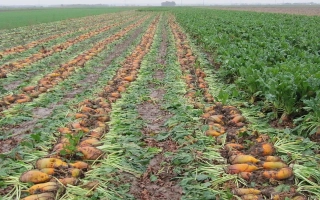
A distinctive feature of the Barbara sugar beet is that a significant portion of its roots protrude above the soil surface, facilitating manual harvest without specialized machinery and reducing harvesting costs. Due to its resistance to adverse conditions and diseases, as well as good storage capacity at temperatures between +0.5 and +4 °C, this variety is a reliable and convenient feed crop for livestock.
Agronomic features of this variety include planting after winter cereals, corn, potatoes, and annual grasses. During cultivation, soil preparation, fertilizer application, crop maintenance, and timely harvest are necessary. The yield of the Barbara variety reaches approximately 520 centners per hectare for the main crop and 208 centners per hectare for the secondary crop, demonstrating its high productivity.
A distinctive feature of the Barbara sugar beet is that a significant portion of its roots protrude above the soil surface, facilitating manual harvest without specialized machinery and reducing harvesting costs. Due to its resistance to adverse conditions and diseases, as well as good storage capacity at temperatures between +0.5 and +4 °C, this variety is a reliable and convenient feed crop for livestock.
Specifications hover over for a hint about the specification
|
Direction
Direction
Existing varieties and types of cabbage are grown for fresh consumption, long-term storage, and technical processing. |
|
|---|---|
| Registration year | 1995 |
| Catalog | Catalog → Feed Beet |
| Manufacturer | MARIBO SEED |
| Legal data |
Show · 8
|
| Country | Denmark |
Store offers
Prices are updated on loadLoading offers…
Aggregator catalog: prices are collected automatically from store websites, normalized by AI and converted at the current exchange rate. Before ordering, confirm the price and availability on the store's website. This block is not indexed by search engines — the data is loaded after the page opens.
Not yet комментариев. Be the first!





See also
Often considered together with this variety





Recently viewed
Products you’ve viewed on this site
Reviews · 0