


SKU #74155
·
42 views
Center
Brome Grass
Innoseed b.v.User rating
0 votes0% positive reviews
No ratings yet — be the first.
Assignment
Feed, For Hay
Type
Perennial
Hay Yield (t/ha)
8-10
Registration year
2000
Store offers · 4 from 3 stores
Prices are updated on loadLoading offers…
Available at: ARTiss · Bulatochka · Плідник Круглик
Aggregator catalog: prices are collected automatically from store websites, normalized by AI and converted at the current exchange rate. Before ordering, confirm the price and availability on the store's website. This block is not indexed by search engines — the data is loaded after the page opens.
About product

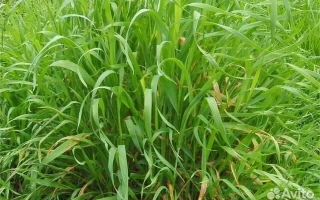
Perennial bromegrass with high regrowth intensity and productivity of up to 10 tonnes of hay per hectare.
Assignment
Feed, For Hay
Type
Perennial
Hay Yield (t/ha)
8-10
Registration year
2000
Description
Genetic Potential and Productivity of 'Center'
The 'Center' bromegrass cultivar from the Dutch company Innoseed b.v. is the result of extensive breeding efforts by the DLF and Pure Line Seeds consortium. In agricultural practice, this perennial grass has proven itself to be one of the most stable tools for establishing high-yield forage lands. The key feature of 'Center' lies in its morphophysiological adaptability: the plant demonstrates high regrowth intensity after mowing, allowing for a consistent yield of 8–10 tonnes of hay per hectare, depending on the agricultural management.
Technical Aspects of Sward Development
- Root System: Possesses a high degree of tillering, which ensures a dense sod layer. This is critical for preventing soil erosion and suppressing weed competition in forage fields.
- Metabolic Intensity: The variety is optimized for efficient dry matter accumulation. The rate of biomass accumulation during the vegetation period is balanced to ensure that the heading phase does not lead to a sharp decline in stem nutritional quality.
- Biological Hardiness: The genetics provided by Pure Line Seeds ensure resistance to temperature fluctuations typical of European climatic zones, guaranteeing stand persistence over several years of use.
'Center' is highly recommended for intensive hay-production systems. The optimal balance between leafiness and stem structure simplifies the drying and baling processes, maintaining maximum protein content in the finished forage.
Crop & resistance
Crop
Specifications hover over for a hint about the specification
| Assignment | |
|---|---|
|
Type
Type
Galia (Galia) type — relatively new, of Israeli origin, although there are indications that this variety may originate from Spain. The fruits of this type are round or oval, weighing about 1 kg. The surface is smooth, covered with a delicate, connected netting, turning yellow whe... |
|
| Hay Yield (t/ha) | 8-10 |
| Registration year | 2000 |
| Catalog | Catalog → Brome Grass |
| Manufacturer | Innoseed b.v. |
| Legal data |
Show · 13
|
| Country | Netherlands |
Not yet комментариев. Be the first!
Alternatives
Brome Grass · similar varieties


See also
Often considered together with this variety


Recently viewed
Products you’ve viewed on this site
Reviews · 0