


SKU #71042
·
41 views
BAROPTIAMA
Fescue
BARENBRUG HOLLANDUser rating
0 votes0% positive reviews
No ratings yet — be the first.
Plant Height
60-100
Leaf Decorativeness
Green
Registration year
2017
About product

A reliable choice for a dense, vibrant green sward with minimal maintenance and mowing requirements.
Plant Height
60-100
Leaf Decorativeness
Green
Registration year
2017
Description
Stability and Aesthetics: Growing Baroptima
When it comes to creating high-quality turf, the choice of variety determines 80% of your success. Baroptima fescue by Barenbrug Holland is a solution for those who aren't willing to compromise between decorative quality and resilience. In field conditions, this variety proves itself to be a reliable “workhorse” that responds predictably to agronomic practices.
Agronomic Performance and Crop Management
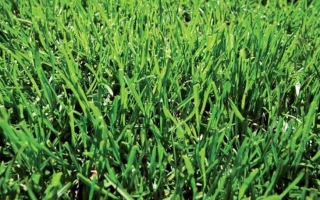
With plant heights ranging from 60 to 100 cm, Baroptima forms a dense, thick sward with a vibrant green color. The leaf blade maintains its decorative look throughout the entire growing season, which is critical for landscaping and recreational areas. As a site owner, you will appreciate the uniformity of the cover: the variety tillers excellently, covering the soil and leaving no chance for weeds to take hold.
Maintenance and Operational Efficiency
- Irrigation: The variety exhibits excellent drought resistance, a trademark of Barenbrug selection. Even in low-moisture conditions, the plant doesn't lose turgor immediately, significantly reducing irrigation requirements.
- Mowing: Thanks to its moderate growth rate, mowing frequency is reduced compared to aggressive, fast-growing grasses. This saves fuel and extends the service life of your mowing equipment.
- Winter Hardiness: Dutch breeding guarantees high adaptability to sharp temperature fluctuations, which is critical for diverse climate zones.
Baroptima is forgiving of maintenance oversights, making it an ideal choice for both professional landscapers and private property owners who value their time. These are seeds designed for performance, ensuring a predictable result for your sowing campaign without the need for constant overseeding or intensive growth stimulant applications.
Specifications
| Plant Height | 60-100 |
|---|---|
| Leaf Decorativeness | |
| Registration year | 2017 |
| Catalog | Catalog → Fescue |
| Manufacturer | BARENBRUG HOLLAND |
| Legal data |
Show · 1
|
| Country | Netherlands |
Store offers
Prices are updated on loadLoading offers…
Aggregator catalog: prices are collected automatically from store websites, normalized by AI and converted at the current exchange rate. Before ordering, confirm the price and availability on the store's website. This block is not indexed by search engines — the data is loaded after the page opens.
Not yet комментариев. Be the first!
Alternatives
Fescue seeds · similar varieties




See also
Often considered together with this variety





Recently viewed
Products you’ve viewed on this site
Reviews · 0