

SKU #71056
·
34 views
Carolina
Fescue
BARENBRUG HOLLANDUser rating
0 votes0% positive reviews
No ratings yet — be the first.
Type
Sugarcane Oat
Assignment
Lawn, Feed
Tread Wear Resistance
High
Leaf Decorativeness
Green
About product

CAROLINA is a hexaploid species of tall fescue (Festuca arundinacea Schreb.) with a six-chromosome genetic composition. The plant has a semi-erect bush, long, wide, and shiny light-green leaves that are ribbed and flat. The flag leaf is medium to long in size, and the inflorescences are pendulous panicles in June–July.Plant height in the heading phase ranges from 90 to 130 cm, with dry matter yiel…
Type
Sugarcane Oat
Assignment
Lawn, Feed
Tread Wear Resistance
High
Leaf Decorativeness
Green
Description
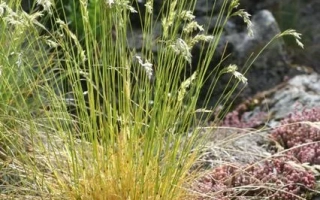
CAROLINA is a hexaploid species of tall fescue (Festuca arundinacea Schreb.) with a six-chromosome genetic composition. The plant has a semi-erect bush, long, wide, and shiny light-green leaves that are ribbed and flat. The flag leaf is medium to long in size, and the inflorescences are pendulous panicles in June–July.
Plant height in the heading phase ranges from 90 to 130 cm, with dry matter yield reaching 50–70 c/ha, and in some trials – up to 110 c/ha and more. Green mass content is 190–225 c/ha, dry matter up to 100 c/ha. Protein content is at 10.4%, calcium 0.4% and magnesium 0.2%. The crop grows quickly in spring and after mowing, has good winter hardiness, drought resistance and tolerance to trampling.
CAROLINA is widely used as a turf and forage crop. Due to hard leaves and flat culms, the plant withstands trampling well, recovers quickly after damage and is suitable for sports fields. When grown in sunny areas with infertile soil without waterlogging, the plant demonstrates resistance to frost and drought, making it a valuable choice for agro-landscape construction and forage systems.
Plant height in the heading phase ranges from 90 to 130 cm, with dry matter yield reaching 50–70 c/ha, and in some trials – up to 110 c/ha and more. Green mass content is 190–225 c/ha, dry matter up to 100 c/ha. Protein content is at 10.4%, calcium 0.4% and magnesium 0.2%. The crop grows quickly in spring and after mowing, has good winter hardiness, drought resistance and tolerance to trampling.
CAROLINA is widely used as a turf and forage crop. Due to hard leaves and flat culms, the plant withstands trampling well, recovers quickly after damage and is suitable for sports fields. When grown in sunny areas with infertile soil without waterlogging, the plant demonstrates resistance to frost and drought, making it a valuable choice for agro-landscape construction and forage systems.
Specifications
| Type | |
|---|---|
| Assignment | |
| Tread Wear Resistance | |
| Leaf Decorativeness | |
| Registration year | 2011 |
| Catalog | Catalog → Fescue |
| Manufacturer | BARENBRUG HOLLAND |
| Legal data |
Show · 6
|
| Country | Netherlands |
Store offers
Prices are updated on loadLoading offers…
Aggregator catalog: prices are collected automatically from store websites, normalized by AI and converted at the current exchange rate. Before ordering, confirm the price and availability on the store's website. This block is not indexed by search engines — the data is loaded after the page opens.
Not yet комментариев. Be the first!
Alternatives
Fescue seeds · similar varieties





See also
Often considered together with this variety








Recently viewed
Products you’ve viewed on this site
Reviews · 0