
Disease · viral
Tomato leaf curl virus
Begomovirus solanumtumoris
Description
Symptoms
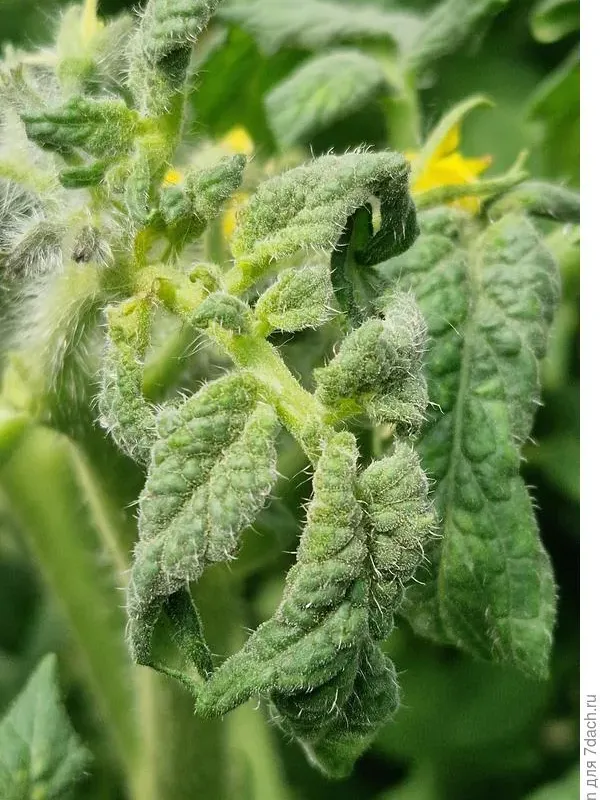
The most distinct symptoms include upward curling of the leaf margins and severe crumpling or leaf distortion. Affected leaves often exhibit chlorosis (yellowing), particularly along the veins, and become leathery or brittle.
Infected tomato plants show significant stunting, with shortened internodes giving the plant a bushy or rosette-like appearance. The overall growth is severely restricted compared to healthy plants.
Flower production is drastically reduced, and existing flowers frequently drop before fruit set. Any fruit that does develop is typically small, misshapen, and commercially valueless.
The presence of whitefly adults and nymphs on the abaxial side of the leaves is a primary diagnostic indicator. Early symptoms often appear as localized patches within the greenhouse or field, which then spread rapidly.
Symptoms are usually most severe on young, rapidly growing tissues. As the disease progresses, the plant loses its ability to produce enough energy for proper maturation.
Pathogen
Tomato leaf curl virus is caused by various species of the genus Begomovirus (family Geminiviridae). These viruses possess a single-stranded circular DNA genome and are strictly dependent on insect vectors for transmission.
The virus is transmitted by the whitefly, Bemisia tabaci, in a persistent circulative manner. Once the whitefly acquires the virus through feeding on an infected plant, the virus circulates within the insect's hemolymph before reaching its salivary glands.
After a latent period, the whitefly remains capable of transmitting the virus for the remainder of its lifespan. This persistent transmission makes the whitefly an extremely efficient vector for spreading the pathogen within and between fields.
The virus replicates in the phloem tissue of the host plant, disrupting the translocation of photoassimilates. This systemic infection eventually leads to the characteristic developmental disorders seen in the plant.
Wild plants, particularly weeds in the Solanaceae family, serve as essential reservoirs for the virus. During the winter or between cropping seasons, the virus persists in these weeds, providing a source for the next outbreak.
Conditions for development
High whitefly populations are the primary driver of virus outbreaks. Warm temperatures ranging from +25°C to +30°C significantly accelerate the life cycle of the whitefly, leading to rapid population expansion.
Greenhouse environments often provide ideal conditions for the virus by offering constant shelter and abundant hosts for the whitefly. Poor ventilation and high humidity facilitate the movement of insects across the crop.
The lack of an effective exclusion system, such as insect-proof netting, allows whiteflies to migrate from surrounding fields into the greenhouse. This is especially problematic during late summer when field populations peak.
Continuous cropping without a proper fallow period or the presence of alternate host weeds near the facility ensures a steady supply of infected plant material for the vectors to feed on.
Dry and hot climatic conditions tend to increase the migration activity of adult whiteflies, causing them to spread the virus over larger areas in shorter periods of time.
Why it matters
This virus is a major constraint to tomato production, capable of causing 100% crop failure if infection occurs at the seedling stage. Economic losses are severe due to both yield reduction and poor quality.
Fruits from infected plants do not meet quality standards, rendering them unmarketable. This results in significant financial losses for producers targeting both local and export markets.
The disease weakens the host plant's immune system, making it more susceptible to secondary pathogens such as powdery mildew or various soil-borne root diseases.
Management costs increase substantially as farmers are forced to implement intensive insecticide programs and remove infected plants, which reduces the plant density and productivity per area.
In regions with high disease incidence, strict quarantine measures may be imposed, restricting the movement of produce and seeds, which can cause long-term regional economic impacts.
Protection
Management must focus on controlling the whitefly population. This includes the application of systemic insecticides, alternating modes of action to prevent resistance development, and the use of biological control agents like Encarsia formosa.
Exclusion is the most effective prevention strategy. Covering all greenhouse openings with insect-proof mesh prevents whiteflies from entering, significantly reducing the risk of primary infection.
Sanitation practices such as removing all weeds from the vicinity of the greenhouse and ensuring a clean start by sanitizing the structure between growing cycles are vital for eliminating virus reservoirs.
Using certified, virus-free transplants raised in protective enclosures is essential. Growers should also monitor whitefly populations using yellow sticky traps to trigger control measures early.
- Planting resistant or tolerant tomato varieties if available.
- Monitoring crops regularly to identify and remove early symptomatic plants.
- Proper waste management to prevent the buildup of whitefly populations near production areas.
Content graph
Connections · Tomato leaf curl virus
Most often together:
Marketplace
Products · 14








Community
Discussion
No discussions yet — be the first.