
Clavibacter michiganensis
Clavibacter michiganensis
Description
How to identify
Clavibacter michiganensis is a gram-positive, rod-shaped bacterium belonging to the Actinobacteria phylum. It is a highly specialized plant pathogen that primarily affects plants in the Solanaceae family.
Taxonomically, the pathogen belongs to the Bacteria kingdom, the Actinobacteria phylum, and the Clavibacter genus. The subspecies C. michiganensis subsp. michiganensis is considered the most significant economically.
The bacterium is characterized by its ability to survive in various environments, including seeds, soil, and crop debris, for extended periods. It colonizes the xylem of host plants, effectively blocking the transport of water and nutrients.
Laboratory diagnosis of the pathogen is typically performed using ELISA, PCR analysis, or by isolating the bacterium on selective media. Such methods are essential for accurate identification and management of the disease.
Transmission occurs through contaminated seeds, infected transplants, agricultural tools, irrigation water, and direct contact between healthy and diseased plants or plant parts.
What it damages
The primary host for this bacterium is the tomato (Solanum lycopersicum). It causes a destructive disease known as bacterial canker, which can occur in both open-field and greenhouse environments.
Economic impact is severe, with potential yield losses ranging from 50% to over 80% during outbreaks. Infected plants often show stunted growth and may eventually perish entirely.
The pathogen causes systemic wilt because the bacterial mass physically obstructs the vascular tissue, leading to a disruption of the plant's metabolic and water-transport functions.
Apart from tomatoes, the bacterium can occasionally affect peppers and eggplants. Solanaceous weeds can serve as latent reservoirs for the pathogen, sustaining it between crop seasons.
Marketability of the fruit is severely compromised due to the development of characteristic lesions, rendering the produce unsuitable for fresh market sale or industrial processing.
When it appears
The development of the disease is highly favored by warm, humid conditions with temperatures ranging from +20°C to +28°C. These conditions facilitate rapid multiplication of bacteria within host tissues.
Symptoms frequently appear during the flowering and fruit-setting stages, as the plant increases its vascular activity, which inadvertently assists in the systemic spread of the pathogen.
Agricultural operations like pruning and tying are critical periods for disease spread if tools are not disinfected between plants, as the bacterium can easily be transferred via contaminated surfaces.
Insect activity can also influence the spread, as various pests feeding on foliage can act as vectors for the transmission of the bacteria between neighboring plants.
Autumn conditions pose a threat as the bacteria retreat into the root system and soil, entering a dormant state or surviving in plant debris to persist until the next planting season.
Signs of infestation
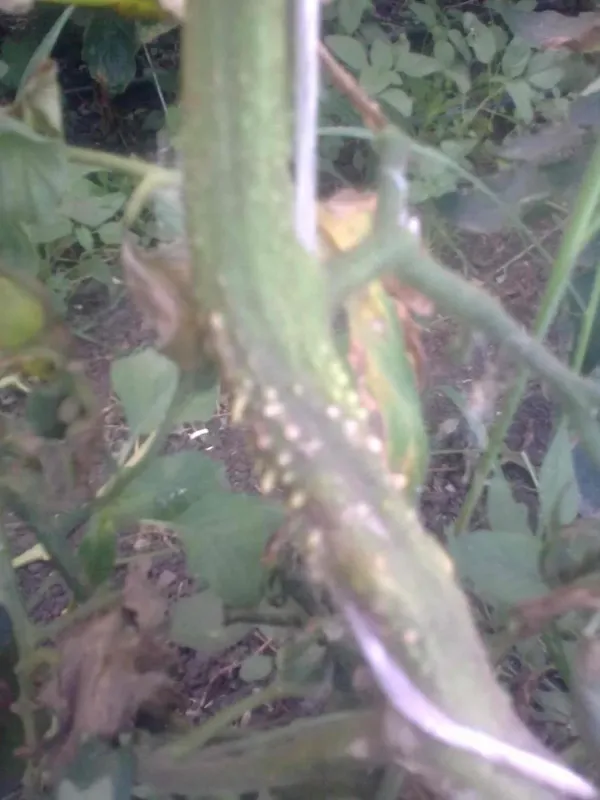
The earliest symptom is often unilateral wilting of leaflets, which then yellow and turn brown. Eventually, the entire leaf and stem may wilt and collapse.
Cross-sectioning of the stem reveals a distinctive browning or necrosis of the vascular bundles. In advanced stages, the internal stem tissue may become soft and hollow.
Fruit symptoms are highly specific, appearing as small white spots surrounded by a dark halo, a phenomenon commonly known as the «bird's eye» spot.
Plants become brittle, and under certain conditions, a bacterial ooze may be visible if a stem is cut or pressed. Overall, the plant displays signs of severe nutrient and water deprivation.
- Marginal chlorosis on leaves.
- Darkened vascular tissue on stem cross-sections.
- Specific «bird's eye» lesions on fruits.
- Systemic wilting.
- Stunted plant growth and premature death.
Control measures
The most crucial control measure is the exclusive use of pathogen-free, certified seed. Pre-sowing seed treatment using thermal or chemical methods is mandatory to ensure disease-free starts.
Strict sanitation protocols for agricultural tools must be implemented. Disinfecting shears and other equipment between plants is essential to prevent horizontal transmission.
Upon detecting infected plants, they must be immediately rogued and destroyed away from the production area to minimize the inoculum load on the farm.
Implementing a rigorous crop rotation program is vital; avoiding solanaceous crops on the same field for at least 3–4 years helps reduce soil-borne inoculum levels.
In greenhouses, maintaining optimal microclimatic conditions, controlling humidity, and performing thorough end-of-season disinfections of structures and soil are essential for preventing recurrence.
Causes diseases · 2
Discussion
No discussions yet — be the first.