
Bacterial wilt of cucurbits
Erwinia tracheiphila
Description
How to identify
The causative agent of the disease is the gram-negative, rod-shaped bacterium Erwinia tracheiphila, belonging to the Enterobacteriaceae family. It is an obligate parasite that specifically colonizes the xylem of host plants, obstructing the flow of water and nutrients.
The pathogen does not survive for extended periods in soil. Instead, it overwinters within the bodies of beetle vectors, specifically striped and spotted cucumber beetles (Acalymma and Diabrotica species). These insects are the primary mechanism for transmission.
Upon entry through insect-feeding wounds, the bacteria multiply rapidly within the plant's vascular system. They produce copious amounts of extracellular polysaccharides, forming a sticky substance that physically blocks the xylem vessels.
Diagnosis requires a laboratory approach, often involving bacterial isolation or PCR analysis to distinguish it from other vascular wilt diseases. Field identification is typically based on observing the characteristic wilt progression and using the "ooze" test.
The field test involves cutting a stem and slowly separating the two pieces. If Erwinia tracheiphila is present, thin, viscous strands of bacterial ooze will connect the cut surfaces, confirming the vascular blockage.
What it damages
The pathogen primarily affects members of the Cucurbitaceae family, including cucumbers, muskmelons, pumpkins, and squashes. While cucumbers and melons are highly susceptible, watermelons exhibit a higher degree of resistance to the disease.
Damage occurs when beetles feed on leaves, creating wounds where the bacteria can enter. Once inside, the pathogen systemically spreads throughout the vascular tissues, leading to inevitable plant collapse and death.
The economic impact can be severe, with potential yield losses of up to 100% in unprotected fields. The rapid spread of the disease is directly proportional to the population density of the beetle vectors.
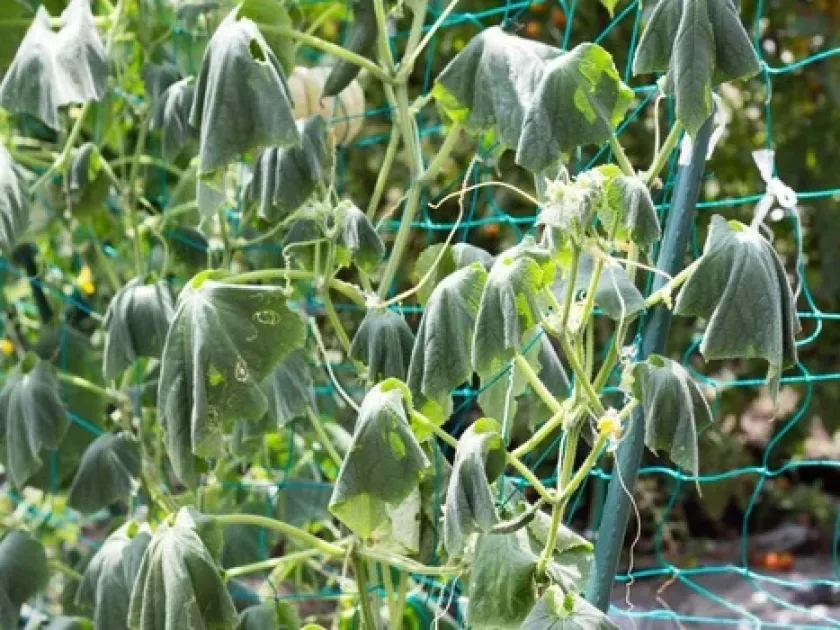
Infected plants suffer from stunted growth, leaf necrosis, and total wilting of the vines. There is no curative treatment for an infected plant, making prevention of initial infection the only viable management strategy for growers.
Besides direct yield reduction, the disease necessitates consistent investment in insecticides to manage beetle populations, adding to the overall cost of production and increasing the chemical footprint in the field.
When it appears
The disease peaks during the active growing season, typically from June to August, when beetle activity is at its highest. The prevalence of the disease is strongly correlated with the lifecycle and migration patterns of the vector beetles.
Favorable conditions for the pathogen include warm and humid weather, which facilitates the metabolic activity of the bacteria inside the host. However, the symptoms of wilting become most acute during dry, hot periods due to restricted water transport.
Primary infection usually begins when overwintering beetles emerge in the spring. Initial signs of wilting often appear within one to two weeks after the insects begin feeding on the young, succulent tissues of the plants.
Secondary spread occurs throughout the summer as subsequent generations of beetles move from plant to plant, carrying the bacteria in their guts and transmitting it through their contaminated excrement or mouthparts while feeding.
As temperatures drop in autumn, the rate of bacterial colonization slows down. However, plants that were infected earlier in the season typically die long before the harvest period, rendering them unproductive.
Signs of infestation
Early symptoms appear as sudden wilting of a few leaves, which may recover at night but eventually remain wilted permanently. The wilting typically progresses to affect entire vines and eventually the whole plant.
Key indicators of the disease include:
- Interveinal yellowing (chlorosis) of the leaves as the first sign of vascular stress.
- Necrotic patches that develop as the plant tissues begin to die due to water deprivation.
- Complete vine death and collapse within several weeks of the initial appearance.
- The presence of sticky, white bacterial strands when a wilted stem is cut and pulled apart.
Unlike Fusarium wilt, the roots of plants infected with Erwinia tracheiphila generally appear healthy, as the primary site of infection and bacterial buildup is limited to the stems and petioles.
Control measures
The primary control strategy is the aggressive management of beetle vector populations. Applying systemic insecticides at the time of planting or early vegetative stages is critical to prevent the bacteria from entering the vascular system.
Promptly removing and destroying infected plants is essential to reduce the local inoculum source and prevent beetles from moving to neighboring healthy plants. Destroyed plant material should be buried or discarded away from the field.
Breeding for resistance is a long-term goal for the industry. Utilizing resistant or less attractive cultivars can significantly reduce the pressure of the disease and the subsequent need for heavy chemical intervention.
Cultural practices, such as controlling weeds that harbor beetles during the off-season and using row covers on young plants, provide effective physical barriers that prevent initial colonization by the insect vectors.
Effective management requires a regular monitoring program for beetle activity. By timing insecticide applications based on scouting data, growers can minimize chemical use while maximizing protection during the most vulnerable stages of the crop.
Causes diseases · 1
Discussion
No discussions yet — be the first.