
Curtobacterium flaccumfaciens
Curtobacterium flaccumfaciens
Description
How to identify
Curtobacterium flaccumfaciens is a Gram-positive, non-motile aerobic bacterium belonging to the Microbacteriaceae family. It is a highly specialized phytopathogen that primarily targets the vascular system of host plants.
The microorganism persists in seeds, crop debris, and soil, making it a significant threat to commercial agriculture. The bacterium can remain in a latent state for extended periods, surviving unfavorable environmental conditions.
Infection spreads through mechanical contact, contaminated irrigation water, insect vectors, and the use of infected seed lots. Once inside the plant, the pathogen multiplies rapidly within the xylem, disrupting the transport of water and essential nutrients.
Taxonomically, the species is divided into several pathovars, each specializing in specific plant hosts. The pathovar flaccumfaciens is particularly well-known for causing systemic vascular diseases in leguminous crops.
Under microscopic observation, these bacteria appear as short rods, often forming chains. They do not produce spores, but their high reproduction rate effectively ensures their survival within the agro-ecosystem.
What it damages
The primary hosts include common beans, soybeans, chickpeas, alfalfa, and other legumes. The bacterium attacks the vascular tissues of stems, leaves, and pods, resulting in systemic infection that often leads to plant death.
The economic impact is characterized by significant yield losses, especially under hot and dry climatic conditions. Infected seeds may be shriveled, exhibit poor germination, or serve as the primary inoculum for future seasons.
Severe infestations result in widespread wilting of fields, making it impossible to produce a marketable crop. Secondary infections that colonize weakened plants can exacerbate the damage to the entire agro-ecosystem.
Financial losses stem from direct crop reduction, the high cost of certifying or cleaning seed stocks, and the need for rigorous quarantine measures in affected areas.
Infection can occur at various stages of plant development, ranging from seedling emergence to pod filling, necessitating continuous monitoring of crop health.
When it appears
The disease development is most active during hot periods of the growing season, particularly when temperatures exceed 25–30 degrees Celsius. Under these conditions, the bacterium colonizes plant vascular tissues most aggressively.
The primary source of infection in the spring is infected seed material. Upon germination, the bacteria penetrate the seedling tissues and gradually spread upwards through the xylem of the stem.
During the rapid vegetative growth phase, the spread of the infection accelerates in the presence of surface moisture, such as frequent rains or overhead irrigation, which facilitates bacterial movement across plant organs.
Symptoms become most pronounced during the flowering and pod formation stages. Plants infected at early stages often die before reaching reproductive maturity, causing significant thinning of the crop stand.
In the autumn, the pathogen retreats into stem residues and seeds, where it enters a dormant state, completing its annual cycle until the next planting season begins.
Signs of infestation
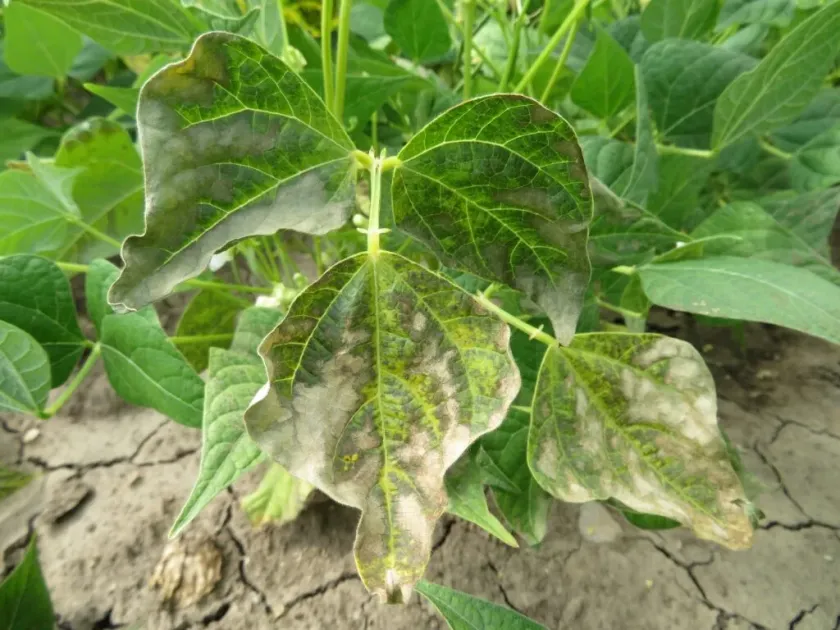
A hallmark sign of the disease is sudden wilting of leaves, which often begins at the margins of the leaf blade. Leaves turn yellow, eventually becoming brown and desiccated, though they often remain attached to the stem.
Cross-sections of affected stems typically reveal a distinct browning of the vascular bundles. Applying pressure to the cut surface may result in the exudation of a yellow or cream-colored bacterial ooze.
Brown streaks or necrotic lesions often form in the stem node areas. In cases of severe infection, stem cracking may occur as a consequence of systemic metabolic disruption within the plant tissues.
On pods, the disease manifests as oily, water-soaked spots that darken over time. Inside the pod, seeds may become coated with a yellowish bacterial film or suffer from deformation due to the pathogen's impact.
- Interveinal chlorosis of leaf tissues.
- Curling and premature drying of foliage.
- Darkening of vascular tissues on stem cuts.
- Exudation of bacterial ooze from infected tissues.
Control measures
The primary method of control is the exclusive use of high-quality, certified seed material free from phytopathogens. Testing seed stocks for the presence of the bacteria is a critical step in preventing epidemics.
Strict adherence to crop rotation is essential, with a gap of at least 3–4 years before planting legumes again in the same field. This duration is necessary for the natural decomposition of infected plant debris.
Agrotechnical measures include deep plowing of crop residues immediately after harvest. Removing leguminous weeds, which can act as alternative reservoirs for the infection, significantly lowers the inoculum potential in the field.
Chemical seed treatment using bactericidal products can reduce the risk of primary infection, although it does not guarantee complete protection in environments with high bacterial pressure.
During the growing season, overhead irrigation should be avoided to prevent the spread of the pathogen. If infection clusters are detected, they must be isolated, and all farming equipment should be thoroughly disinfected.
Causes diseases · 3
Discussion
No discussions yet — be the first.