
Clavibacter michiganensis
Clavibacter michiganensis
Description
How to identify
Clavibacter michiganensis is a Gram-positive, non-spore-forming actinomycete bacterium that causes bacterial canker, one of the most destructive diseases in tomato cultivation globally.
Classified under the family Microbacteriaceae, this pathogen colonizes the xylem vessels of the host plant. It survives in seeds, plant debris, and on various greenhouse surfaces.
The bacterium is highly resistant to desiccation, which allows it to persist for extended periods in dry soil and on wooden structures or contaminated farming tools.
Laboratory diagnosis typically involves selective plating media, where the pathogen produces characteristic yellow, mucoid colonies, followed by PCR or ELISA testing to confirm the subspecies.
Given its status as a major phytosanitary risk, global regulatory bodies classify it as a quarantine organism, requiring strict containment and exclusion strategies.
What it damages
The primary host for Clavibacter michiganensis is the tomato plant (Solanum lycopersicum). It also impacts other solanaceous crops like peppers, eggplants, and some weed species.
The pathogen disrupts the vascular system, leading to systemic wilting. Once the xylem is blocked, the plant can no longer transport nutrients and water, leading to rapid decline.
Fruit symptoms are highly distinctive, often appearing as small, white spots with dark centers, commonly referred to as bird's-eye spots, which significantly lower market quality.
Economic damage is severe, as the infection spreads rapidly during routine greenhouse activities like pruning and harvesting, potentially destroying an entire season's yield.
Severe infestations render crops unmarketable, and the longevity of the bacteria in the environment creates long-term management challenges for producers.
When it appears
Disease development is favored by warm temperatures (22–28°C) and high relative humidity. These conditions accelerate the multiplication of bacteria within the vascular tissues.
Initial infection often occurs via contaminated seeds or infected soil at the start of the season. Bacteria germinate and enter the seedling through stomata or mechanical wounds.
Throughout the vegetative stage, the spread is primarily driven by splashing water, infested tools, and contact between infected and healthy tissues during pruning.
The infection reaches its peak during the flowering and fruit-set stages, as the plant demands higher hydraulic conductance, making it more susceptible to xylem blockage.
During the off-season, the pathogen persists in the root systems of weeds or within crop residues buried in the soil, awaiting favorable conditions for the next cycle.
Signs of infestation
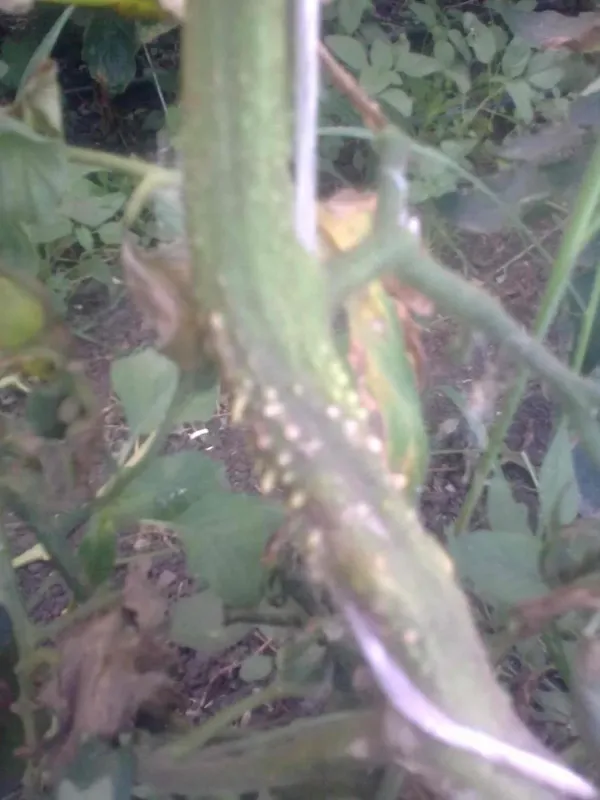
The first symptoms are typically marginal leaf chlorosis and wilting. In later stages, leaves may turn brown and wither while remaining attached to the stem.
A diagnostic sign is observed when cutting the stem longitudinally; the vascular tissue displays a distinct yellow to brown discoloration, and the pith may become hollow.
Stem cankers or longitudinal cracks may appear, sometimes exuding a bacterial ooze in high humidity. These cracks serve as entry points for secondary infections.
Fruit symptoms include localized necrotic spots surrounded by a pale halo, which can cause misshapen fruit development if the infection occurs during the early fruit-setting phase.
- Marginal chlorosis on lower leaves.
- Vascular browning inside the stem.
- Bird's-eye spots on the surface of fruits.
- Stem cracking and ulcerative lesions.
- Sudden flagging or wilting of the entire plant.
Control measures
The cornerstone of management is the use of pathogen-free, certified seeds. Seed disinfection through heat treatment or chemical dipping is a recommended preventative measure.
Crop rotation of at least 3 years is necessary to manage soil-borne inoculum. During this period, solanaceous weeds must be strictly eradicated to prevent bacterial persistence.
Sanitation is critical: tools must be disinfected after working with each plant. Greenhouse surfaces should be thoroughly sanitized between growing seasons to eliminate residual populations.
Proper environmental control, such as reducing humidity and preventing water splash during irrigation, helps mitigate the rapid spread of the bacteria.
Infected plants should be rogued and destroyed immediately. While copper-based sprays can provide some protective coverage, they are not curative and must be used as part of an integrated management program.
Discussion
No discussions yet — be the first.