
Bacterial wilt
Ralstonia solanacearum
Description
Symptoms
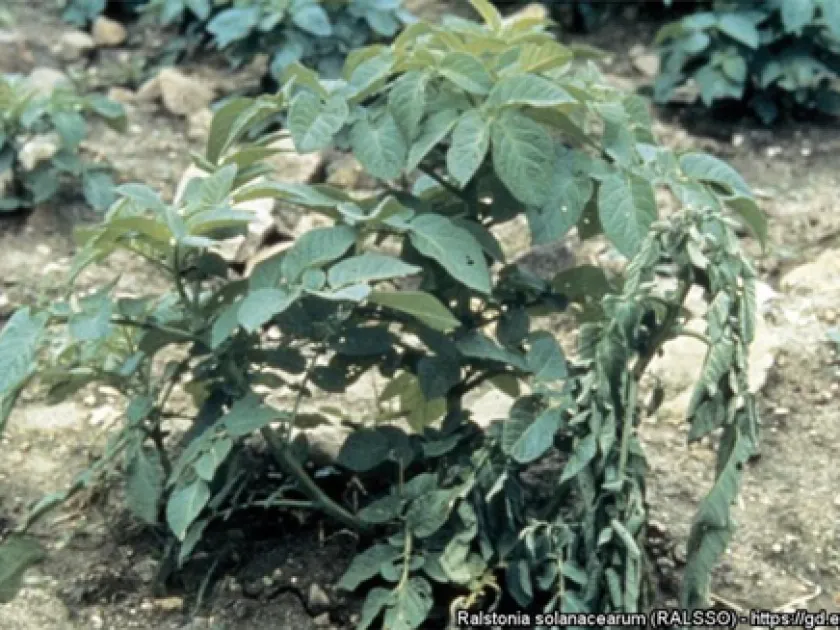
The earliest symptom is the wilting of lower leaves during the hottest part of the day. Affected plants may appear to recover at night, but the condition worsens rapidly over time.
A cross-section of the stem reveals distinctive browning of the vascular tissues. In advanced stages, a milky bacterial ooze may be observed exuding from the cut surface.
Root systems often show signs of decay, and the overall plant growth becomes stunted. Necrosis of the foliage is a final stage of the infection process.
Many ornamental plants are susceptible to this pathogen. Important hosts that require careful management include:
- Browallia speciosa
- Cyclamen persicum and Fuchsia
- Gerbera jamesonii
- Pelargonium species (scented geraniums, ivy geraniums)
Complete collapse and death of the plant typically occur within a few days after the symptoms become visible.
Pathogen
The causal agent of this disease is the soil-borne gram-negative bacterium Ralstonia solanacearum. It is a highly significant quarantine pathogen with an exceptionally wide host range.
The bacterium colonizes the xylem of the plant, where it multiplies rapidly. This leads to the production of extracellular polysaccharides that physically block water transport.
The pathogen can persist for long periods in soil, in infected plant debris, and in the roots of alternative weed hosts. It is frequently spread through contaminated irrigation water or infected cuttings.
The biological nature of the pathogen includes high genetic diversity, with various races and biovars that exhibit different host specificities and environmental adaptations.
Due to its ability to survive in diverse environments, it remains a major challenge for plant pathologists and nursery producers globally.
Conditions for development
The disease thrives in warm temperatures, typically ranging from +25 to +35 degrees Celsius, making it especially problematic in tropical and greenhouse environments.
High soil moisture is a critical factor for the development and spread of Ralstonia solanacearum. Waterlogging creates ideal conditions for the bacteria to move through the soil.
Infection is facilitated by injuries to the roots, which often occur during transplanting or as a result of activity by soil-dwelling pests.
Poor sanitation practices, such as the use of unsterilized tools and recycled drainage water, significantly exacerbate the risk of outbreaks.
While lower temperatures may limit the bacteria's activity, the pathogen can remain dormant in the soil until more favorable conditions arise.
Why it matters
Bacterial wilt is highly destructive because there is currently no effective chemical cure for infected plants once the pathogen has colonized the vascular system.
The economic impact is profound, leading to significant losses in agricultural yield and total crop failure in ornamental plant production.
Detection of this disease in a nursery often results in strict quarantine measures, which can force the destruction of entire inventory batches.
The pathogen poses a major threat to global plant trade, as it is strictly regulated in many countries due to its persistence and potential for rapid spread.
Increased production costs due to rigorous testing and preventative measures are common among growers attempting to manage this persistent threat.
Protection
The most critical management practice is the use of healthy, disease-free starting material. All nursery stock should be sourced from certified, clean facilities.
Strict sanitation protocols must be implemented, including the regular disinfection of all tools, work surfaces, and containers with approved disinfectants.
Any plant showing symptoms must be immediately removed, along with the surrounding soil, and disposed of by incineration or deep burial far from production areas.
Crop rotation and effective weed control are essential strategies to reduce the pathogen population in the soil over time.
Managing the greenhouse environment by avoiding waterlogged soils and minimizing root damage helps to prevent the initial infection and subsequent spread of the disease.
Pathogens and affected parts
Affects crops · 7
Discussion
No discussions yet — be the first.