
Pseudomonas cattleya
Pseudomonas cattleya
Description
How to identify
Pseudomonas cattleya (currently classified as Acidovorax cattleyae) is a specialized bacterial pathogen that primarily affects members of the Orchidaceae family. It is a gram-negative, rod-shaped bacterium known for causing aggressive tissue decay in its hosts.
The bacterium is motile due to polar flagella, allowing it to navigate through water films on plant surfaces. This mobility is a critical factor in its transmission, as water droplets from irrigation or high humidity levels facilitate its spread between plants.
Infection is usually facilitated by natural entry points like stomata or by wounds caused by handling, repotting, or insect feeding. Once inside the plant tissue, the bacterium begins to colonize the intercellular spaces, utilizing enzymatic activity to break down plant cell walls.
The biological cycle of this pathogen is highly dependent on environmental conditions. It thrives in warm, moist climates, which are also the typical conditions for optimal growth of many popular orchid varieties like Cattleya and Phalaenopsis.
Research indicates that the pathogen can persist in substrates and on contaminated tools for extended periods. This survival capability makes it difficult to eradicate completely from growing environments without strict sanitation protocols.
What it damages
The primary hosts of this pathogen include various species of Cattleya, Phalaenopsis, Cymbidium, and Dendrobium. The disease causes severe damage to both the aesthetic value and the structural integrity of the plants.
Damage often manifests on the tender parts of the plant, including young leaves and growing tips. If the infection reaches the meristem (the growing point), it typically results in the rapid death of the orchid, as recovery is impossible once the growth center is destroyed.
In commercial nurseries, the damage caused by Pseudomonas cattleya can lead to significant economic losses due to the need to discard large batches of stock. The rapid spread of the bacteria makes it one of the most feared pathogens by orchid breeders.
Secondary infections are common following the primary bacterial attack. As the plant tissue dies and begins to decay, other opportunistic fungi and bacteria colonize the area, leading to a complex and highly destructive rot process.
The pathogen's impact is not limited to leaves; it can also affect roots and pseudobulbs, leading to systemic failure of the plant's vascular system and total collapse of the plant.
Signs of infestation
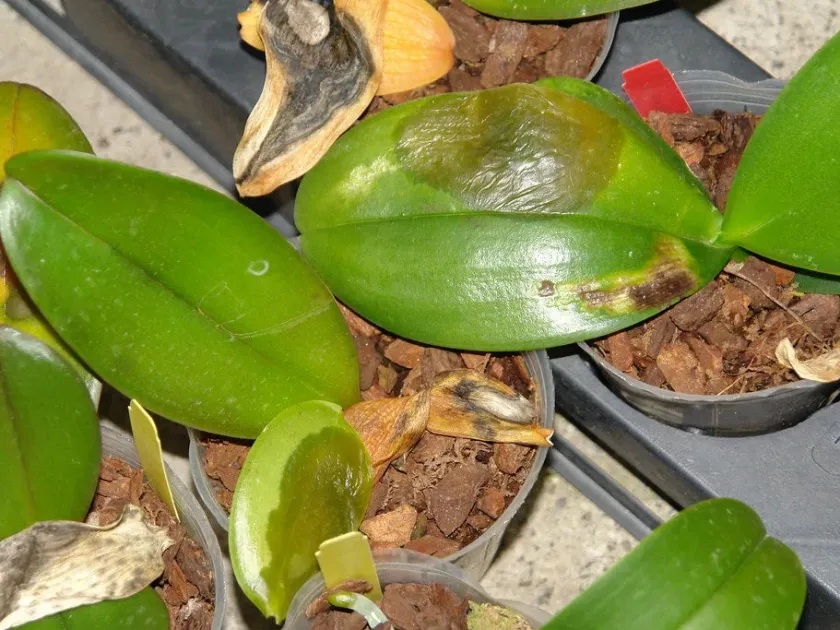
Initial symptoms are characterized by small, translucent, water-soaked spots on the leaves. These spots can expand rapidly and turn dark green, brown, or black, often with a yellow halo surrounding the necrotic area.
Under conditions of high humidity, a viscous bacterial exudate often appears on the surface of the lesions. This liquid is teeming with bacteria and serves as the primary inoculum for spreading the disease to healthy parts of the plant or adjacent orchids.
The affected tissue quickly loses its structure, becoming soft, mushy, and emitting a foul, rotting odor. This is a classic sign of bacterial soft rot caused by the rapid dissolution of the pectin within cell walls.
When the roots are affected, the velamen (the white, spongy outer layer of orchid roots) becomes slimy, loses its texture, and detaches from the vascular cylinder, rendering the roots non-functional.
Systemic infection manifests as browning of the vascular tissues visible on cross-sections of the leaves or pseudobulbs. This indicates that the bacteria have moved throughout the plant’s internal transport system.
Control measures
Sanitation is the cornerstone of managing Pseudomonas cattleya. All tools must be sterilized using alcohol or heat between each plant to prevent the mechanical transmission of the pathogen through contaminated blades.
Environmental management is crucial for control. Reducing humidity levels below 60% and ensuring adequate air circulation in the growing area will significantly hinder the bacterium's ability to survive and move across plant surfaces.
If an infection is detected, the affected areas must be excised immediately. It is vital to cut well into the healthy tissue to ensure that no pathogen remains, as the bacteria can move rapidly through internal tissues beyond the visible necrotic area.
Chemical control involving copper-based bactericides can be used as a preventative measure. However, treatment must be balanced with the plant's sensitivity to chemicals; always test on a small area first to avoid phytotoxicity.
- Use sterilized, high-quality potting media.
- Quarantine all new plants before introducing them to the main collection.
- Minimize water splashes on leaves during irrigation.
- Manage insect pests that can create wounds for entry.
- Destroy severely infected plants to prevent further spread.
Causes diseases · 9
Discussion
No discussions yet — be the first.