
Erwinia
Erwinia
Description
How to identify
The genus Erwinia belongs to the family Erwiniaceae and comprises Gram-negative, rod-shaped, motile bacteria. These pathogens are significant threats to various crops worldwide.
The most famous species, Erwinia amylovora, is the primary cause of fire blight in Rosaceae plants, posing a major risk to pome fruit production.
These bacteria function as facultative anaerobes. They possess specialized enzymes that allow them to dissolve pectin in plant cell walls, leading to tissue degradation.
Identification is typically achieved through morphological analysis, biochemical testing, or highly specific PCR-based molecular diagnostics.
As prokaryotic organisms, they are highly adaptable and can survive in diverse environmental conditions, including soil and woody plant tissues.
What it damages
Erwinia species infect a wide array of plants, causing diseases such as fire blight, soft rot, and stem cankers. Common hosts include apples, pears, tomatoes, potatoes, and onions.
The pathogen causes necrosis, rapid wilting, and complete decay of tissues. Infected fruits and vegetables often liquefy, becoming a malodorous, slimy mass.
In pome fruits, the infection can destroy entire branches or even kill the host tree within a single growing season if left untreated.
For vegetable crops, soft rot caused by Erwinia is a devastating post-harvest disease that can compromise entire storage units if humidity is not controlled.
The economic impact of these bacteria is severe, as they can cause total crop failure in susceptible orchards and produce storage facilities.
When it appears
Infection begins in early spring during flowering, as the bacteria are attracted to the nectar in blossoms. High humidity and warmth are critical for rapid disease progression.
During the summer months, the bacteria are spread by pollinators, splashing rain, contaminated pruning tools, and insect vectors like aphids or leafhoppers.
Temperature fluctuations and heavy rainfall events create ideal conditions for the bacteria to colonize wounded tissues or natural openings like stomata.
During autumn and winter, the pathogen resides in dormant cankers on tree branches or in infected debris, surviving in a quiescent state until the following spring.
In storage, the disease cycle continues throughout the year if vegetables are kept in warm, damp conditions without proper ventilation.
Signs of infestation
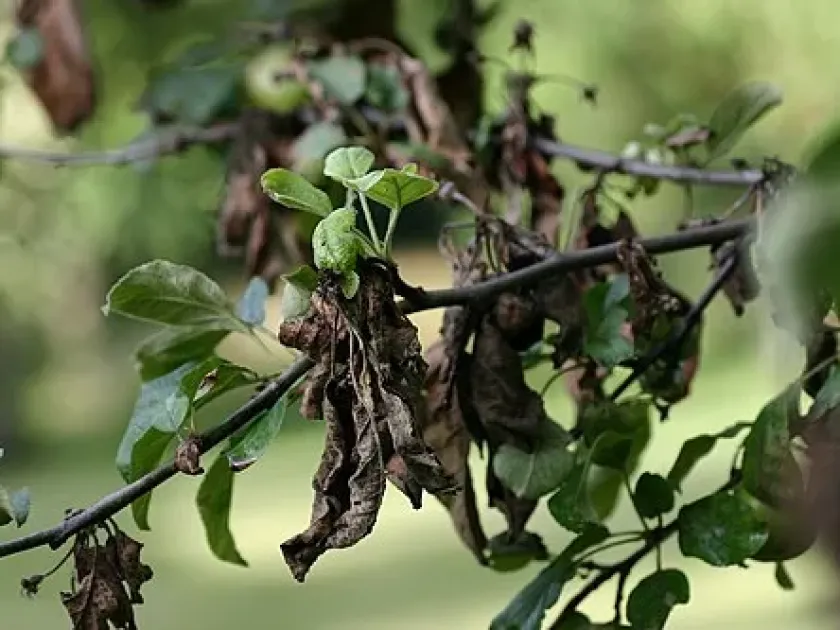
The characteristic sign of fire blight is the sudden wilting and blackening of blossoms and leaves, resembling fire damage. Infected branches often droop in a characteristic shepherd’s crook shape.
Oozing droplets of white or amber bacterial exudate are often visible on the surface of affected plant tissues under high humidity conditions.
The bark of infected branches may appear water-soaked, eventually turning dark brown or black, cracking, and sinking into the wood tissue.
In fleshy vegetables, signs include soft, mushy spots with a pungent, foul odor, indicating the complete breakdown of cellular structure.
Internally, vascular bundles often show discolouration, and the tissue becomes watery and friable, losing all commercial value.
Control measures
Sanitation is the cornerstone of control. Pruning out infected wood at least 20-30 cm below the visible necrosis is vital to stopping the disease spread.
Sterilization of pruning equipment between cuts using alcohol or bleach solutions is mandatory to avoid transferring the bacteria to healthy parts of the plant.
The use of copper-based bactericides during the blooming period is a standard preventive measure in high-risk areas to protect orchard health.
Maintaining proper sanitation, irrigation management, and controlling insect vectors are critical strategies in integrated pest management (IPM).
- Removal and destruction of infected plant debris.
- Use of certified disease-free planting materials.
- Application of biological antagonists like Bacillus subtilis.
- Strict temperature and humidity control in storage areas.
Causes diseases · 15
Discussion
No discussions yet — be the first.