
Curtobacterium flaccumfaciens
Curtobacterium flaccumfaciens
Description
How to identify
The pathogen Curtobacterium flaccumfaciens belongs to the kingdom Bacteria, genus Curtobacterium. It is a Gram-positive, aerobic bacterium recognized as a significant phytopathogen capable of causing vascular diseases.
The bacterium is known for its ability to persist in seeds, soil, and plant debris for extended periods. Its resilient nature allows it to survive in various environments, posing a challenge for phytosanitary control.
Morphologically, it is a non-spore-forming, short rod-shaped bacterium. Despite its lack of spores, it is highly adapted to colonizing the vascular systems of host plants, leading to systemic infection.
Taxonomically, the species comprises several pathovars, each with specific host ranges. Accurate laboratory identification is essential to distinguish between them and implement effective quarantine or control measures.
Advanced diagnostic methods, including molecular techniques like PCR, are frequently used to detect the presence of the pathogen in seed lots, preventing its introduction into new agricultural areas.
What it damages
The pathogen primarily affects legumes, most notably common beans (Phaseolus vulgaris) and soybeans. It colonizes the plant's xylem, impeding the transport of essential nutrients and water.
Transmission is largely driven by infected seeds. Once introduced into a field, the bacteria can spread through rain splashes, irrigation water, and contaminated agricultural tools used during field operations.
Infection often occurs through natural openings like stomata or through physical wounds caused by insects or machinery. Once inside, the population multiplies rapidly, causing severe systemic symptoms.
Early-stage infection in seedlings is particularly devastating, often resulting in damping-off or total plant mortality. This can lead to significant crop thinning and substantial yield losses in affected fields.
The pathogen can also affect the seed quality of the harvested produce, turning it into a carrier for future seasons, which makes it a critical concern for seed production industries.
When it appears
The disease development is most intense during warm and humid weather conditions. High temperatures facilitate the rapid replication of the bacteria within the plant’s vascular tissue.
Rainy seasons significantly accelerate the spread of the pathogen, as water droplets carry bacteria from infected plants to adjacent healthy ones, often leading to rapid disease expansion across fields.
During the off-season, the bacteria remain in a dormant state within plant residues or deep in the soil, awaiting favorable conditions to restart their lifecycle when the next planting season begins.
Springtime provides the trigger for the bacteria to resume activity as seeds germinate. Initial infections often start from the infected seed coat and spread upward into the developing stems and leaves.
Environmental conditions during the flowering and pod-filling stages are critical, as high moisture during these phases can lead to more widespread symptoms and lower resistance in the host plant.
Signs of infestation
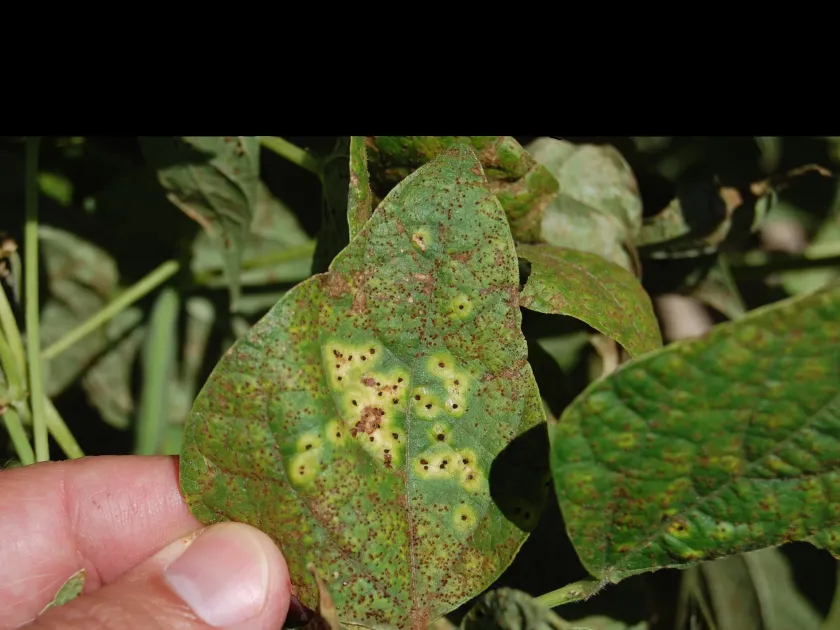
Symptoms typically manifest as yellowing of the leaf margins followed by rapid wilting. Despite soil moisture, the plants fail to recover, as the vascular system is blocked by bacterial colonization.
Stems may develop dark, water-soaked streaks or lesions. In advanced stages of infection, stems may show signs of splitting or shriveling, often resulting in premature plant collapse and death.
Dissection of the stem reveals characteristic browning of the vascular tissues, which confirms the presence of systemic bacterial infection and the destruction of the plant's plumbing system.
In some cases, seeds from infected plants may show visible staining, discoloration, or shriveling, serving as a visual indicator of the seed's status as a vector for the disease.
Field observation often reveals a localized or patchy distribution of symptomatic plants, reflecting the initial points of infection and subsequent spread by mechanical contact or environmental factors.
Control measures
The primary control measure is the use of certified, disease-free seed. Utilizing resistant or tolerant cultivars is the most effective approach to minimize damage and ensure stable yields.
Implementing a rigorous crop rotation cycle, with a break of at least 3 to 4 years from susceptible legume hosts, is essential to reducing the pathogen load in the soil.
Effective sanitation, including the removal and destruction of crop residues after harvest, helps to break the survival cycle and prevents the carry-over of inoculum into the following year.
Chemical control options are generally limited to preventive measures, such as seed treatments or copper-based sprays, which should be applied early in the season to be effective.
- Sourcing high-quality disease-free seeds
- Selecting genetically resistant plant varieties
- Cleaning equipment to prevent mechanical transmission
- Monitoring fields for early signs of wilting
- Practicing strict crop rotation schedules
Discussion
No discussions yet — be the first.