
Bacterial blight of grapevine
Xylophilus ampelinus
Description
Symptoms
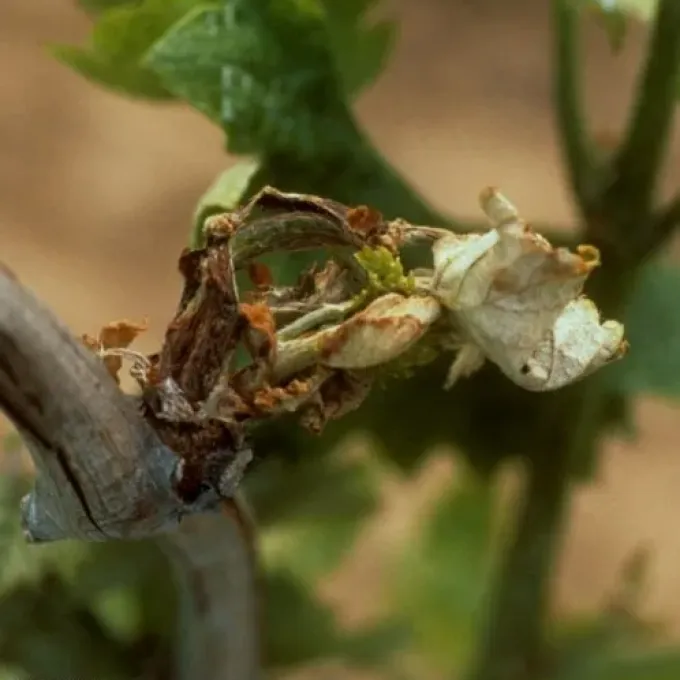
Early signs often appear in spring as a delay in bud break, with affected shoots appearing weak, stunted, and frequently displaying chlorosis.
Leaf symptoms include small, angular, dark-brown spots often surrounded by a light-yellow halo; in severe cases, leaves may become necrotic and drop prematurely.
The stems and canes show longitudinal cracking, through which a bacterial ooze may exude during periods of high humidity or rainy weather.
Deep localized lesions develop on the bark of one-year-old canes, which eventually become dark, shriveled, and die back, reflecting the disruption of vascular flow.
Cross-sections of affected canes reveal distinct browning or blackening of the vascular bundles, confirming the presence of the pathogen within the conductive tissue.
Pathogen
The causative agent of bacterial blight of grapevine is Xylophilus ampelinus, a Gram-negative bacterium that specifically targets the vascular tissues of grapevines.
The pathogen is known for its ability to survive for extended periods within dormant wood, making infected propagation material a major source of long-distance spread.
Upon infection, the bacteria colonize the xylem vessels, multiplying rapidly and secreting substances that cause physical blockage, leading to the characteristic wilting symptoms.
Spread within the vineyard occurs mainly through water splashes during rainfall and through contaminated pruning tools, which can easily transfer the bacteria to healthy vines.
This bacterium is a highly specialized pathogen that affects only members of the Vitis genus, making strict phytosanitary regulations essential for vineyard biosecurity.
Conditions for development
The development of bacterial blight is heavily favored by cool, wet spring weather, which supports bacterial survival and movement on the plant surface.
Mechanical injuries resulting from late spring frosts are critical, as they provide direct access for bacteria to enter the inner vascular system of the vine.
High humidity and consistent rainfall throughout the growing season facilitate the rapid dissemination of the bacteria across the canopy of the vines.
Over-fertilization with nitrogen can create succulent, weak tissue growth that is significantly more susceptible to bacterial infection and colonization.
Optimal bacterial activity occurs at moderate temperatures; however, dry and hot summer weather typically inhibits the progression of the disease symptoms.
Why it matters
The disease causes systemic damage, leading to the gradual decline and eventual death of entire vines, resulting in significant gaps in the vineyard rows.
Yield loss is substantial, often occurring due to the destruction of inflorescences and the shriveling of berries, which renders the fruit unmarketable.
Infected vineyards experience a loss of overall vigor, making them more vulnerable to secondary fungal infections and abiotic stressors like winter damage.
The persistence of Xylophilus ampelinus in woody tissues makes management difficult, often requiring the removal and destruction of entire vine units.
Strict international trade regulations often classify this as a quarantine disease, causing major economic impacts on nurseries and vineyard operations.
Protection
The primary control measure is the use of certified, disease-free planting material to prevent the introduction of the pathogen into new areas.
Strict disinfection protocols for all pruning equipment using alcohol or appropriate sanitizers are necessary to prevent cross-contamination between vines.
Promptly identify, rogue, and incinerate infected vines or plant parts to minimize the inoculum load within the vineyard environment.
Preventative applications of copper-based sprays in early spring, before bud break, can help reduce the population of bacteria on the vine surface.
Implementing good cultural practices, such as proper drainage and ventilation, helps manage humidity levels, which creates a less favorable environment for the pathogen.
Discussion
No discussions yet — be the first.