
Pseudomonas marginalis
Pseudomonas marginalis
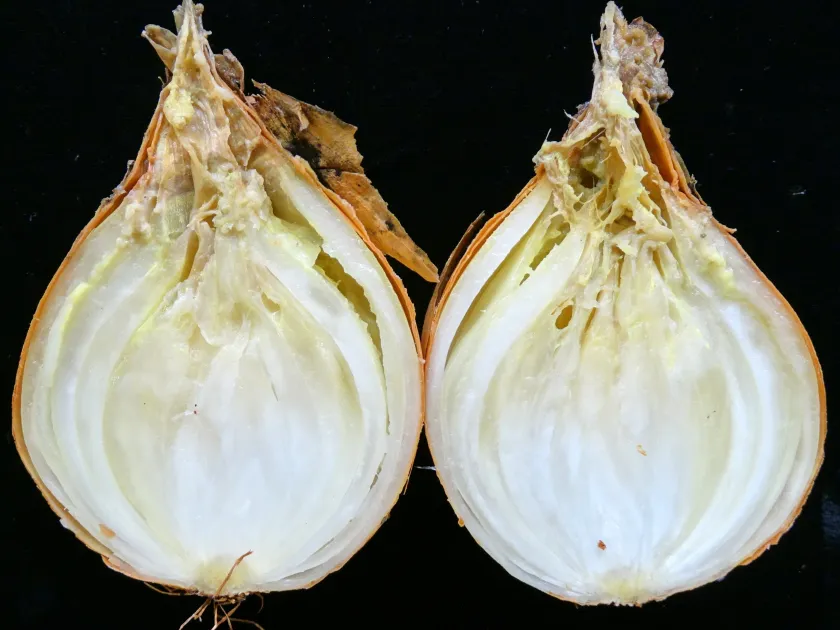
Description
How to identify
Pseudomonas marginalis is a Gram-negative, motile, rod-shaped bacterium belonging to the Pseudomonadaceae family. It is a facultative parasite commonly found in soil and on decaying plant material.
The organism is characterized by strong pectinolytic activity, allowing it to produce enzymes that break down plant cell walls. This enzymatic action is the primary cause of the tissue maceration observed in infected plants.
In laboratory settings, the pathogen is identified by its ability to produce a fluorescent pigment on media with restricted iron availability. It is considered a member of the fluorescent pseudomonad group.
The bacterium thrives at moderate temperatures, typically between 18°C and 25°C. It is capable of surviving in diverse environments and remains viable under various soil conditions.
Because it is a complex and diverse species, molecular diagnostics are often required to accurately distinguish Pseudomonas marginalis from closely related bacterial species.
What it damages
The primary agricultural impact of Pseudomonas marginalis is the development of soft bacterial rot. It affects a wide range of economically important vegetables, including potatoes, tomatoes, lettuce, and crucifers.
The pathogen can damage plants throughout their vegetative cycle, from seedling emergence to maturity, and can cause catastrophic losses in harvested vegetables during storage.
The bacteria typically enter plant tissues through wounds caused by insects, harvesting tools, or environmental factors such as hail, frost, or abrasive soil particles.
In the field, infection can lead to stem rot, root decay, and collapse of foliage. In storage, it manifests as rapid tissue breakdown, rendering the produce completely unmarketable.
Due to its opportunistic nature, this pathogen often works in tandem with other bacteria, exacerbating the speed and severity of the rotting process.
When it appears
Disease development is highly seasonal and is strongly correlated with periods of high humidity and moderate ambient temperatures. Wet conditions are essential for the rapid spread of the pathogen.
During the growing season, transmission is facilitated by rain splashing, irrigation water, and insect vectors that move the bacteria between neighboring plants.
In storage facilities, the seasonal threat increases if there is inadequate airflow or temperature control. Condensation on vegetable surfaces provides the moisture necessary for bacterial multiplication.
The pathogen persists in the environment by surviving in infested soil, weeds, and crop residues, ensuring a continuous inoculum source for future planting cycles.
Field scouting during wet periods is crucial, as the first signs of bacterial infection can spread throughout a plot in a matter of days under favorable conditions.
Signs of infestation
Initial infection signs typically appear as small, water-soaked spots on leaves or stems. These spots rapidly enlarge, turning the tissue into a soft, mushy, and often discolored mass.
Infections on stems frequently lead to tissue collapse. As the bacteria degrade the middle lamella of the plant cells, the structural integrity of the plant is lost entirely.
When rotting occurs in vegetables like cabbage or lettuce, the internal leaves often liquefy, accompanied by a distinct, unpleasant putrid odor that is characteristic of soft rot.
Tubers and root crops show dark, sunken lesions. Upon cutting into an infected tuber, the internal tissue is usually found to be soft, watery, and sometimes discolored.
- Water-soaked lesions on foliage
- Soft, mushy, or slimy tissue texture
- Characteristic putrid, foul odor
- Rapid expansion of necrosis
- General wilting and structural collapse
Control measures
Cultural practices are the cornerstone of management. A multi-year crop rotation schedule is essential to reduce the buildup of the bacterial population in the soil.
Effective pest management is vital, as insects frequently act as vectors for the pathogen. Controlling these pests limits the number of entry wounds available for bacterial colonization.
Storage management is critical to prevent post-harvest losses. Maintaining dry conditions with proper ventilation inhibits the growth of the bacteria on stored produce.
The use of biological control agents, particularly specific strains of antagonistic bacteria, can help suppress Pseudomonas marginalis populations in the rhizosphere.
Harvesting should only occur in dry conditions to minimize the risk of infection. Careful handling during harvest is necessary to prevent bruises and cuts that facilitate pathogen entry.
Causes diseases · 3
Discussion
No discussions yet — be the first.