
Erwinia carotovora
Erwinia carotovora
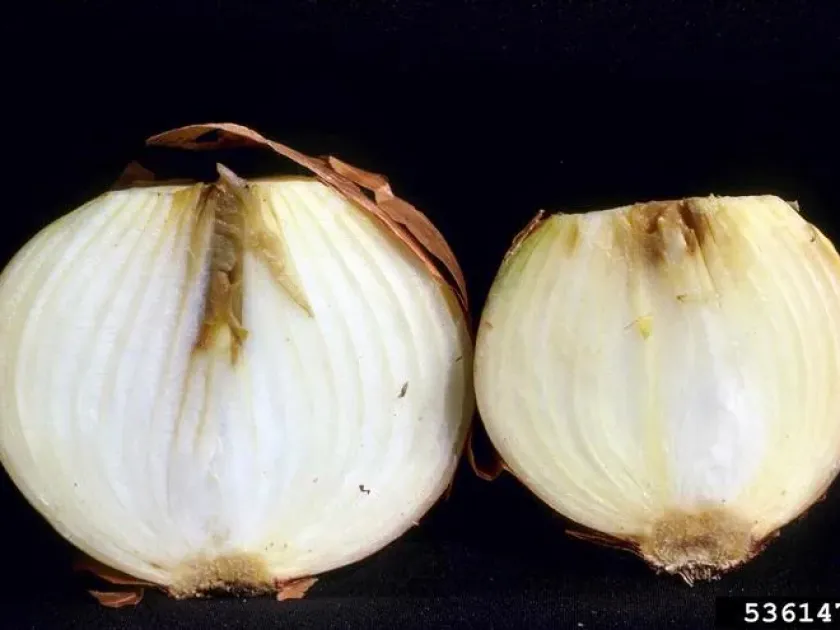
Description
How to identify
Erwinia carotovora (now scientifically classified as Pectobacterium carotovorum) is a gram-negative, rod-shaped bacterium belonging to the Pectobacteriaceae family. It is a highly significant phytopathogen affecting global agriculture.
As a facultative anaerobe, it is highly motile using flagella. Its pathogenicity is characterized by the secretion of pectinolytic enzymes that degrade the middle lamella of plant cell walls, leading to tissue maceration.
Systematically, it is a member of the Proteobacteria phylum. The species is diverse, with multiple subspecies identified, each capable of infecting a wide array of host plants across different botanical families.
The bacterium survives in soil, on plant debris, and within the digestive tracts of various insects. It is highly resilient and can remain latent until environmental conditions favor its rapid multiplication.
Accurate identification is typically achieved through diagnostic methods such as selective media plating and PCR analysis, which allow agronomists to distinguish this pathogen from other soft-rot-causing bacteria.
What it damages
Erwinia carotovora has an exceptionally wide host range, including potatoes, carrots, onions, cruciferous vegetables, tomatoes, and ornamental plants. Any plant organ containing significant amounts of water and carbohydrates is a potential target.
The primary symptom is soft bacterial rot. The pathogen enters the plant through wounds caused by harvesting, insect feeding, or natural openings like stomata and lenticels, especially when the plant is water-stressed.
In post-harvest scenarios, the economic damage is profound, as the infection spreads rapidly from one infected tuber or vegetable to its neighbors, often causing the total loss of entire storage batches.
In the field, the disease leads to plant wilting, stem collapse, and the complete decay of roots and tubers. This reduces yields significantly and necessitates rigorous sanitation practices during the growing season.
The maceration process turns solid tissues into a watery mass, making the crop non-marketable and unsuitable for processing, which results in substantial financial losses for producers.
When it appears
Disease progression is strictly dependent on moisture levels. High humidity (above 80%) and wet soil conditions are the primary drivers of bacterial activity and spread throughout the field and storage facility.
The pathogen thrives at temperatures between +20°C and +30°C. While it remains active at lower temperatures, the rapid degradation of plant tissues is most aggressive under warm and humid conditions.
During the growing season, heavy rainfall or over-irrigation can trigger outbreaks. Water films on plant surfaces act as highways for motile bacteria to reach potential infection sites.
In storage, condensation is the enemy. Poor ventilation allows moisture to accumulate, creating the perfect environment for the pathogen to multiply and move from infected produce to healthy surrounding crops.
The pathogen’s lifecycle is opportunistic. It exists as a soil saprophyte during off-seasons and rapidly switches to a parasitic mode whenever it finds host tissue with vulnerable, damaged surfaces.
Signs of infestation
Initial infection manifests as small, water-soaked spots that rapidly expand. As the enzymes break down the cellular structure, the affected areas become soft, mushy, and eventually lose all structural integrity.
A foul, pungent odor is a tell-tale sign of advanced soft rot, caused by the anaerobic fermentation of proteins and other compounds. This odor is often the first indicator of a storage disease outbreak.
The presence of a viscous, bacterial ooze on the surface of the infected tissue is a diagnostic hallmark. This ooze contains high concentrations of bacteria, which can be spread by splashing water or insect activity.
As the disease progresses, the tissue color changes from healthy to translucent, then to brown or black as secondary microorganisms colonize the decaying plant material.
- Water-soaked, translucent lesion areas.
- Rapid tissue maceration and loss of structure.
- Characteristic putrid, foul odor.
- Bacterial ooze present on surface.
- Total transformation of the organ into a soft mass.
Control measures
The most effective strategy is a balanced crop rotation system, avoiding the planting of susceptible crops in the same field for at least 3-4 years to decrease soil-borne bacterial populations.
Sanitation is paramount. Removing and destroying all infected plant debris after harvest prevents the pathogen from building up in the soil. Maintaining strict hygiene in storage facilities is equally crucial.
Minimizing physical damage during harvest and handling is essential, as the bacterium cannot penetrate healthy, intact plant skin. Crops must be properly cured and dried before long-term storage.
Managing insect pests that create entry wounds is a key agricultural practice. Additionally, improving soil drainage and avoiding excessive nitrogen fertilization helps keep plant tissues stronger and more resilient.
Biological and chemical control methods, such as copper-based treatments or specific antagonistic microorganisms, can be used to protect crops in high-risk environments during the growth cycle.
Causes diseases · 4
Discussion
No discussions yet — be the first.