
Pectobacterium carotovorum
Pectobacterium carotovorum
Description
How to identify
Pectobacterium carotovorum is a Gram-negative, rod-shaped, facultative anaerobic bacterium belonging to the Pectobacteriaceae family. It is a major phytopathogen known for its ability to produce highly active pectinolytic enzymes.
These enzymes degrade the middle lamella of plant cell walls, leading to the rapid breakdown of plant tissues. It is taxonomically placed within the Pseudomonadota phylum.
The bacterium is highly versatile and capable of surviving in diverse environments, including soil, water, and infested plant debris. Its genetic adaptability allows it to infect a wide range of host plants.
Detection is often achieved through microbiological culture on selective media or molecular techniques such as PCR, as symptoms can be ambiguous compared to other decay-causing organisms.
The pathogen thrives in anaerobic conditions, which often occur within the deeper layers of rotting tissues, further accelerating the degradation process.
What it damages
This pathogen causes significant damage to numerous vegetable crops, including potatoes, carrots, onions, cabbage, lettuce, and tomatoes. It is particularly devastating in post-harvest storage.
Economic losses are driven by both pre-harvest crop failure, where the pathogen causes systemic rotting, and massive losses in storage facilities where it spreads by contact.
In the field, P. carotovorum typically gains entry through natural openings or wounds inflicted by insects, harvesting tools, or environmental factors such as hail or wind damage.
Once infected, plant tissues lose their structural integrity. In potatoes, this manifests as blackleg (in stems) or tuber soft rot, leading to severe yield reductions.
The infection is exacerbated by secondary invaders, which together turn healthy produce into a watery, foul-smelling mass of decaying tissue.
When it appears
The development of the pathogen is strongly influenced by environmental conditions, particularly high humidity and temperatures between +15°C and +25°C.
During the growing season, periods of heavy rain or excessive irrigation create waterlogged soil conditions, which favor the movement of bacteria through soil pores to plant roots.
P. carotovorum survives the off-season in infected plant remains left in the field or on the surface of seeds and tubers stored for the next planting cycle.
Post-harvest periods are highly critical, as the cooling phase of vegetables, if not managed correctly, can lead to condensation on the product surface, triggering outbreaks.
The bacterial life cycle is optimized for rapid colonization whenever moisture availability is high and the host's physical defenses are compromised.
Signs of infestation
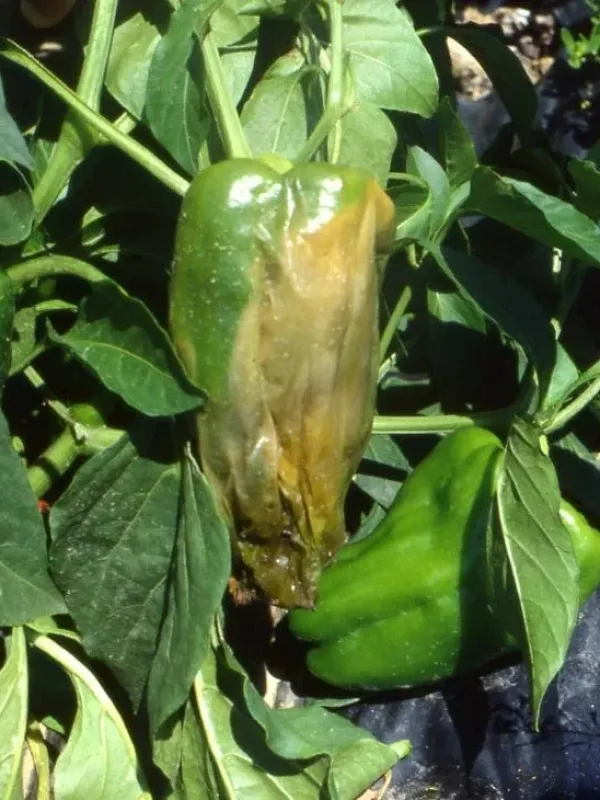
The hallmark of Pectobacterium carotovorum infection is the soft, mushy, and often foul-smelling decay of plant tissues, commonly referred to as "soft rot."
Initially, small water-soaked spots appear on the surface of the fruit or vegetable. These spots expand rapidly, changing color as the internal tissue collapses.
In stems, the infection causes chlorosis (yellowing), wilting, and a dark, slimy decay that eventually leads to the death of the entire plant structure.
Tubers and fleshy roots often show external depressions corresponding to deep, liquefying rot internally, while the epidermis may remain intact for some time.
In advanced stages, the infected tissue loses all structural stability, becoming a liquid consistency that leaks into surrounding produce, spreading the infection further.
Control measures
Effective management begins with strict crop rotation, ensuring that susceptible host crops are not planted in the same field for at least 3 years to reduce soil inoculum.
Sanitation is paramount; all diseased plant residues must be removed and destroyed to prevent the pathogen from over-wintering in the soil.
Controlling insect pests is essential, as larvae (e.g., seedcorn maggot) and other insects act as both vectors and mechanical injury agents for the bacteria.
Careful harvesting practices are required to minimize bruises and cuts. Post-harvest, produce should be washed, dried quickly, and stored in well-ventilated conditions.
Storage temperatures should be kept low to inhibit bacterial metabolic activity, and humidity must be managed to prevent condensation on the produce surface.
Causes diseases · 1
Discussion
No discussions yet — be the first.