
Pseudomonas marginalis
Pseudomonas marginalis
Description
How to identify
Pseudomonas marginalis is a Gram-negative, motile, rod-shaped bacterium belonging to the Pseudomonadaceae family. It is a facultative parasite that exists primarily as a soil inhabitant.
This pathogen is characterized by its ability to produce extracellular pectolytic enzymes. These enzymes dissolve the pectin in the plant cell walls, leading to tissue maceration and the characteristic soft rot symptoms.
It is classified as a broad-host-range pathogen, affecting a wide variety of vegetables and ornamental plants. The bacterium is closely related to other soft-rot-causing organisms like Pectobacterium species.
The bacterium survives in the soil, on plant debris, and in infected seed lots. It is capable of persisting in the rhizosphere for extended periods, waiting for suitable environmental conditions to trigger infection.
Laboratory identification relies on culture on specific media, such as King’s B agar, where the bacteria produce a distinctive fluorescent pigment under ultraviolet light, helping to distinguish it from non-fluorescent pathogens.
What it damages
Pseudomonas marginalis is a major economic threat to vegetable crops, including cabbage, lettuce, potatoes, onions, and various greenhouse crops like tomatoes and cucumbers.
The most significant damage occurs post-harvest in storage facilities. Once the bacterium enters a vegetable, it can rapidly liquefy the tissue, creating a source of inoculum that spreads the rot to adjacent healthy produce.
In the field, it causes seedling damping-off and tissue decay in mature plants. When roots or stems are infected, the plant loses its structural integrity, leading to wilting, stunting, or complete plant death.
Infection usually starts through wounds caused by harvesting, handling, insect feeding, or frost damage. Natural openings like stomata and lenticels also serve as potential entry points under high moisture conditions.
The resulting damage renders affected produce completely unmarketable. Furthermore, the presence of the pathogen often invites secondary infections, compounding losses and reducing the shelf life of stored goods.
When it appears
The development of Pseudomonas marginalis is strictly dependent on moisture levels. It thrives in cool to moderate temperatures and requires high humidity or water-soaked conditions for effective colonization.
In field settings, periods of prolonged rain are critical, as splashing water spreads the bacteria from the soil to the foliage. Waterlogged soil significantly increases the risk of root and basal rot.
Greenhouse environments provide ideal conditions for the pathogen if ventilation is poor and leaf wetness persists. Condensation on leaves acts as a bridge for bacterial movement and subsequent infection.
Harvest time is a high-risk season, especially if produce is collected during wet weather. Handling wet crops increases the likelihood of spread and infection through micro-wounds created during the process.
Winter survival is achieved via dormant states in soil or in residues of host plants. The pathogen remains latent in the environment until the next growing season, when temperature and humidity become favorable again.
Signs of infestation
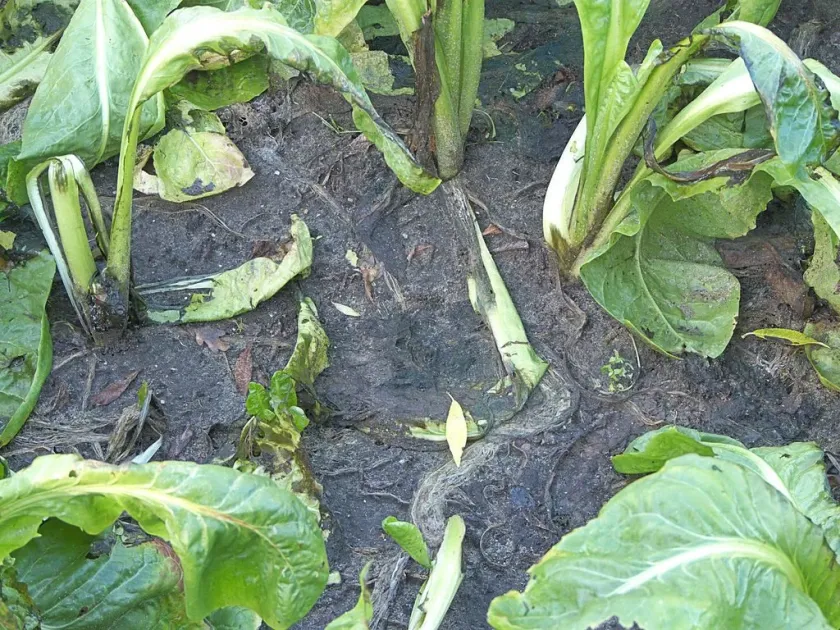
The initial signs of infection are water-soaked, translucent spots on the affected tissue. These spots quickly darken to brown or black as the tissue collapses and loses its firmness.
A foul, putrid odor is a classic diagnostic feature of this bacterial infection. This smell is produced by the breakdown of plant tissues and the metabolic activities of the proliferating bacteria.
On leafy greens like lettuce, the symptoms often manifest as a slimy decay of the leaf margins, which is why the species is named marginalis. The decay can progress rapidly, destroying the entire head.
For tuber and root crops, the infection manifests as deep, mushy lesions. When cut open, the internal tissues often appear grey or brown and may have a creamy or slimy consistency due to bacterial biofilm.
Stalks and stems of infected plants turn soft and limp. The vascular system might show browning, and in severe cases, the plant may collapse completely under its own weight due to the total degradation of the stem tissue.
Control measures
Cultural practices are the primary line of defense. Crop rotation is essential; avoid planting susceptible vegetables in the same field for at least 3 years to reduce the soil bacterial population.
Good field drainage and careful irrigation management are crucial. Avoid overhead irrigation that keeps foliage wet for long periods, and use drip irrigation to keep the plant canopy as dry as possible.
Sanitation is vital during and after harvest. Remove and destroy infected plant parts, clean all harvesting equipment thoroughly, and ensure storage rooms are well-ventilated and dry.
Minimize physical damage to crops during harvesting and packing, as any bruise or scratch serves as a direct point of entry for the bacteria. Storage temperatures should be kept as low as possible for the specific crop.
Chemical control options are limited. Copper-based bactericides can provide some level of protection but are not a substitute for proper field hygiene and good cultural practices that limit moisture and injury.
Discussion
No discussions yet — be the first.