
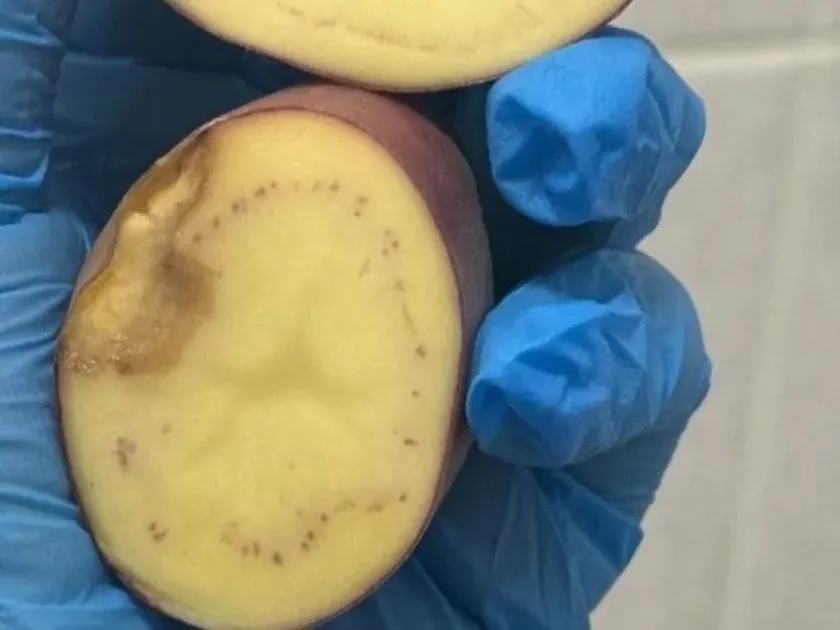
Description
Symptoms
Typical signs include a brownish discoloration of the seed coat and the formation of a slimy, grayish film on the surface.
Infected soybean seeds often exhibit a softening of the tissue and emit a strong, unpleasant fermented or putrid odor.
During germination, the emerging radicle may appear brown, necrotic, and fail to develop into a healthy primary root.
In severe cases, the entire seed internal content turns into a mushy mass, resulting in total loss of viability.
Seedlings that do manage to emerge often show stunted growth, distorted cotyledons, and early necrotic spotting.
Pathogen
The causative agent of this disease is the bacterium Bacillus subtilis, which is typically known as a beneficial biocontrol agent, but can turn pathogenic under specific stress conditions.
This is a bacterial disease that primarily targets the embryo and endosperm of seeds, causing localized tissue decay.
Soybean crops are particularly susceptible, as their high-protein composition creates an ideal nutrient medium for the bacteria.
The pathogen resides in soil and crop debris, waiting for optimal conditions to invade the seed tissue during germination or storage.
Its biological mechanism involves the secretion of extracellular enzymes that degrade seed cells, leading to rapid decay upon exposure to moisture.
Conditions for development
High relative humidity and moisture content in seeds (above 14-15%) are the primary triggers for disease outbreak during storage.
Cold, waterlogged soil during planting is a major factor that slows down germination, keeping the seed vulnerable to the pathogen for too long.
Mechanical injuries during harvesting increase the porosity of the seed coat, allowing Bacillus subtilis to enter the internal tissues easily.
Poor soil aeration and lack of proper field drainage promote conditions where bacterial growth outpaces the seed's defensive mechanisms.
Temperatures ranging from 20°C to 30°C combined with high moisture create a perfect environment for exponential bacterial proliferation.
Why it matters
The disease causes significant economic losses by reducing seed germination rates and leading to poor crop stands in fields.
It can lead to total crop failure, necessitating expensive replanting operations and delaying the planting schedule.
Infected batches of seeds become unsuitable for human consumption or livestock feed due to biochemical degradation.
Seed-borne transmission serves as a source for spreading the pathogen to healthy field areas during the planting season.
Early-stage infection often goes unnoticed until the crop failure is visually apparent, making it a hidden threat to yields.
Protection
The primary control measure is the use of high-quality, certified seeds that have been thoroughly cleaned and graded.
Treatment with systemic fungicides containing antibacterial agents is essential to protect seeds during the vulnerable germination phase.
Strict storage protocols including proper ventilation and humidity control are vital to preventing the development of bacterial rot.
Optimal planting timing, ensuring the soil is sufficiently warm and well-drained, helps seeds germinate quickly and escape infection.
Regular crop rotation and the management of infected plant debris help maintain a lower baseline of pathogenic bacteria in the field soil.
Pathogens and affected parts
Affects crops · 1
Discussion
No discussions yet — be the first.