
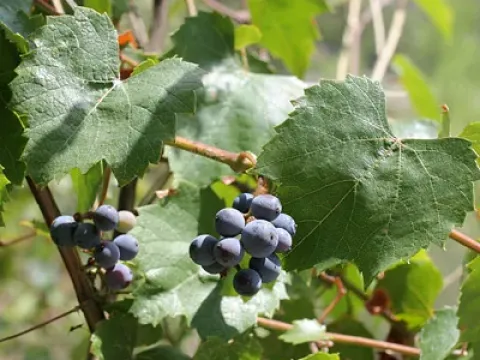
Trelease grape
Vitis treleasei
The Trelease grape (Vitis treleasei) is a distinct species within the Vitaceae family, native to specific North American ecological niches. It is a climbing vine known for its vigorous growth habit and ability to adapt to diverse environments within its natural range.
What the section contains
Trelease grape
Botanically, Vitis treleasei is characterized by flexible, woody stems and specialized tendrils that allow it to scale vertical structures. The foliage is typical for the genus, providing extensive leaf area that supports robust metabolic activity during the warm growing season.
Climatic requirements for this species include moderate temperatures and a sufficiently long frost-free period to allow for full wood maturation. While it is hardy in its native habitat, agricultural success depends on maintaining stable moisture levels in the root zone.
Soil preferences lean towards well-drained loams with adequate organic matter content. Proper drainage is critical, as the species is susceptible to root stress if subjected to prolonged waterlogging, particularly in heavy clay soils.
Agricultural management requires structural support systems, such as trellises or arbors, to facilitate proper canopy development. Regular pruning is necessary to manage vigor, improve airflow, and ensure that solar energy is directed towards healthy vine production.
Fungal pathogens represent the most significant threat to the Trelease grape, with powdery mildew being a primary concern. The interaction between humidity levels and canopy density directly impacts the susceptibility of the plant to these infections.
Insect pests such as leafhoppers and various mite species can inflict significant damage on the foliage if left unchecked. Implementing an integrated pest management program, including biological controls, is highly recommended for commercial or garden settings.
Phylloxera remains a concern for most Vitis species, requiring careful attention to root health and the use of resistant rootstocks when planting in endemic regions to prevent irreversible vine decline.
Vigilant monitoring for early symptoms of nutrient deficiencies or pest colonization allows for targeted interventions. This proactive approach minimizes the need for heavy chemical applications while maintaining plant vigor.
Sanitation practices, such as clearing debris from the base of the vines at the end of the season, are essential to break the life cycle of many common vineyard pests and reduce the inoculum of overwintering pathogens.