
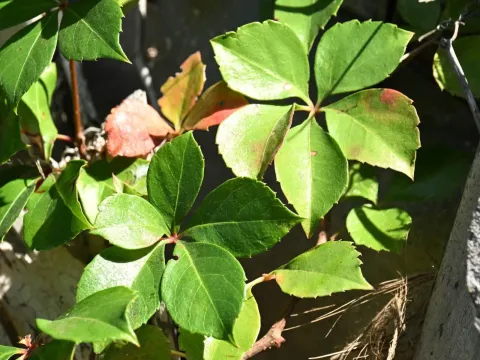
Virginia creeper
Parthenocissus
Virginia creeper (Parthenocissus) is a genus of vigorous, deciduous woody vines belonging to the Vitaceae family. Native to North America and East Asia, these plants are widely cultivated for their exceptional ability to climb surfaces and their stunning autumn foliage colors.
What the section contains
 Parthenocissus semicordata
Parthenocissus semicordata
Parthenocissus semicordata
 Seven-leaf creeper
Parthenocissus heptaphylla
Seven-leaf creeper
Parthenocissus heptaphylla
 Thicket creeper
Parthenocissus inserta
Thicket creeper
Parthenocissus inserta
 Thomson's Creeper
Parthenocissus thomsonii
Thomson's Creeper
Parthenocissus thomsonii
 Virginia creeper
Parthenocissus hybrids
Virginia creeper
Parthenocissus hybrids
Virginia creeper
The plant is highly adaptable to various soil types, ranging from sandy loams to heavy clays, provided there is adequate drainage. It demonstrates remarkable winter hardiness, making it a reliable choice for landscaping across a wide range of climatic zones without special protection.
While Virginia creeper thrives in full sunlight, it shows significant tolerance to partial shade, which makes it versatile for diverse planting sites. The plant utilizes specialized tendrils with adhesive pads to cling onto brick, wood, and stone, allowing it to cover large structures effectively.
Agronomic management requires minimal effort once established. Annual pruning is recommended to control its rapid growth and prevent the vine from encroaching on roofs, gutters, or windows. Regular irrigation during the first two years is essential for deep root development.
In landscaping and agriculture, Parthenocissus is primarily used for vertical greening. Its dense foliage acts as an effective thermal insulator for building walls, helps to trap particulate matter, and provides essential habitat for various pollinating insects and local fauna.
Although generally robust, the plant can be susceptible to fungal infections such as leaf spot or powdery mildew, especially in humid and poorly ventilated conditions. Good air circulation is key to preventing these issues throughout the growing season.
Common pests include aphids, scale insects, and Japanese beetles that may feed on the foliage. Monitoring the plants during the spring and early summer allows for timely intervention using horticultural oils or systemic insecticides if infestations occur.