
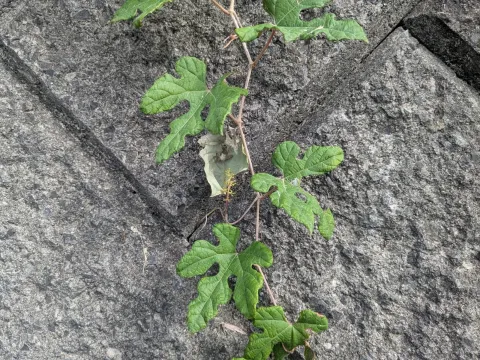
Thunberg grape
Vitis ficifolia
The Thunberg grape (Vitis ficifolia) is a hardy perennial liana belonging to the Vitaceae family. It is native to East Asia, specifically regions within China, Japan, and Korea, where it thrives in forest margins and mountainous environments.
What the section contains
Thunberg grape
This species is well-regarded for its adaptability to various soil types, though it prefers well-drained, fertile soil with a slightly acidic to neutral pH. It exhibits significant cold tolerance, making it a reliable choice for vertical landscaping in temperate zones.
Cultivation requires the provision of robust trellises or supports to accommodate the plant's vigorous climbing habit. Regular watering is essential during the active growing season, particularly for young plants, to ensure proper root establishment and foliage density.
Pruning is a critical agricultural practice for this species, usually performed in late winter or early spring. Removing excess growth helps maintain the desired shape and encourages the development of the characteristic fig-like foliage that gives the plant its scientific name.
In terms of хозяйственное usage, the Thunberg grape is primarily an ornamental asset. Its dense foliage provides excellent cover for privacy screens, fences, and pergolas, offering a lush aesthetic value that persists throughout the spring and summer months.
Like many species within the genus Vitis, this plant is susceptible to fungal issues such as downy mildew and powdery mildew. Maintaining adequate air circulation around the canopy through proper spacing and pruning is the most effective preventative measure.
Pests that typically affect Vitis ficifolia include spider mites and vine leafhoppers, which can cause yellowing and premature leaf drop. Integrated pest management strategies, including the use of neem oil or targeted predatory insects, are recommended for organic care.