
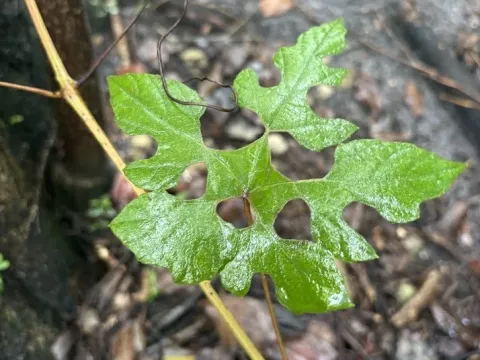
Shuttleworth's grape
Vitis shuttleworthii
Shuttleworth's grape (Vitis shuttleworthii) is a woody climbing vine belonging to the Vitaceae family. This species is native to the southeastern United States, primarily found in the state of Florida, where it flourishes in diverse forest ecosystems.
What the section contains
Shuttleworth's grape
The plant typically inhabits moist deciduous forests, riverbanks, floodplains, and the margins of wetlands. It is perfectly adapted to a subtropical climate, which provides the high humidity levels necessary for its vigorous vegetative growth and annual development cycles.
Regarding soil requirements, this species thrives in well-drained yet consistently moist substrates. It shows a preference for soils with a neutral or slightly acidic pH, often found in nutrient-rich riparian corridors, and can tolerate periods of seasonal flooding.
Botanically, it is a climbing vine that utilizes tendrils to ascend into the canopy of host trees to access sunlight. In the absence of vertical support, it forms dense mats on the forest floor, acting as a groundcover that stabilizes the soil surface.
The species lacks significant frost tolerance, limiting its natural distribution to warmer regions. As an agricultural or ornamental plant, it requires protection from freezing temperatures, as exposure to sustained cold can lead to significant physiological damage or death.
The agricultural utility of Shuttleworth's grape is limited. Unlike commercial cultivars of Vitis vinifera, its fruits are small, contain numerous seeds, and possess high acidity, making them unsuitable for large-scale wine production or table consumption.
Its primary value lies in ecological restoration and land management. The vine's robust root system and rapid growth rate make it an excellent candidate for stabilizing riverbanks and slopes, effectively reducing soil erosion in its native habitat.
The plant provides essential ecosystem services by serving as a food source for local bird species and small mammals. In landscape design, it is occasionally utilized for vertical greening of fences and structures in subtropical gardens where minimal maintenance is required.
Current research investigates Vitis shuttleworthii for its potential genetic resistance to regional pathogens. Breeders are interested in identifying traits that could be introgressed into commercial grape varieties to improve their resilience in humid, subtropical growing conditions.
Yield in wild populations is highly variable and serves primarily ecological rather than economic purposes. A mature, healthy vine can produce several kilograms of berries annually, which reach maturity during the late summer and early autumn months.
Like other members of the genus Vitis, this species is susceptible to various fungal pathogens, including downy mildew and powdery mildew. These diseases are particularly prevalent in its native range due to the consistently high humidity and warm temperatures.
Insect pests such as grape mites and leaf-roller larvae can cause damage to the foliage and tender shoots. While healthy wild plants often tolerate these pressures through natural resistance, ornamental specimens may require intervention to maintain aesthetic health.
Root rot represents a significant threat when soil drainage is poor or during prolonged periods of waterlogging. Proper management involves ensuring adequate site drainage and avoiding the accumulation of stagnant water around the root zone of the vine.
Nematodes, particularly in sandy soil types typical of Florida, can pose a risk to the root system. Effective management strategies involve the selection of vigorous planting sites and the use of healthy, disease-free nursery stock to ensure long-term plant vitality.
Sanitation practices, such as the pruning of dead or diseased wood, are recommended to promote air circulation within the vine's canopy. This simple maintenance step significantly reduces the incidence of fungal spores and helps maintain the overall health of the plant.