
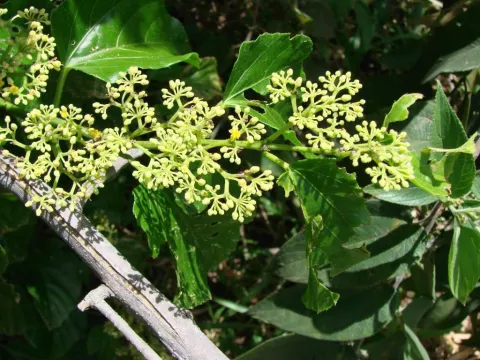
Tilia-leaf grape
Vitis tiliaefolia
The Tilia-leaf grape, scientifically known as Vitis tiliaefolia, is a member of the Vitaceae family. This species is identified by its distinctive leaves, which closely resemble those of the linden tree, providing the basis for its taxonomic nomenclature.
What the section contains
Tilia-leaf grape
Native to the tropical regions of Central and South America, this plant is naturally found in forest ecosystems. It acts as a climbing vine, often reaching significant heights by clinging to forest canopy structures to maximize its exposure to sunlight.
The climate requirements for this species are strictly tropical, necessitating high temperatures and high humidity levels throughout the growing season. The plant lacks cold hardiness and will suffer irreversible damage if exposed to freezing conditions or prolonged cold spells.
Regarding soil preferences, it thrives in deep, fertile, and well-drained soils. Organic matter enrichment is beneficial, and while the plant appreciates moisture, it is essential to prevent waterlogging, which can easily induce root rot in heavy or compacted soil textures.
Economic use of Vitis tiliaefolia typically involves the consumption of its berries, which are gathered locally or grown on small-scale farms for the production of juices and regional beverages. Its vigorous growth habit also makes it suitable for vertical landscaping in warm climates.
Major threats to the cultivation of Vitis tiliaefolia include fungal pathogens such as downy mildew and anthracnose. These diseases thrive in the humid environments where this vine is naturally adapted, posing a risk to both foliage and fruit quality during the rainy season.
Insects like the grape phylloxera and various species of scale insects are significant pests that can severely hinder the plant's growth. These pests damage the vascular system of the vine, leading to reduced vigor and making the plant more susceptible to secondary infections.
Effective management involves maintaining proper vine spacing to encourage airflow, which is critical in reducing the leaf wetness duration. Regular pruning to remove overcrowded or diseased wood helps sustain the overall health of the vineyard and improves sunlight penetration.
Routine inspection of the vine canopy is recommended to detect pest infestations or disease outbreaks early. Integrated pest management strategies, focusing on the combination of cultural, biological, and chemical controls, ensure long-term stability for the vines.
The removal and destruction of infected plant material are standard sanitation practices. By keeping the orchard clean and ensuring balanced nutrient application, growers can optimize the resilience of the vines against typical tropical diseases.