
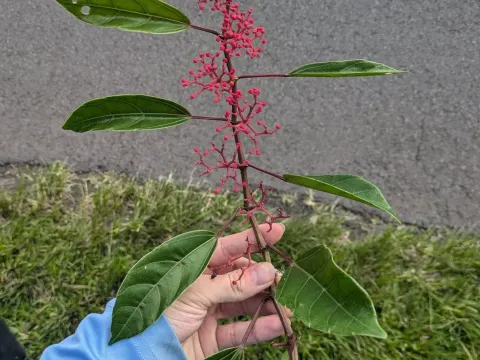
Cissus nodosa
Cissus nodosa
Cissus nodosa is a perennial climbing plant belonging to the Vitaceae family. Originating from the tropical rainforests of Southeast Asia, it is well-adapted to high-humidity environments and moderate forest floor lighting, making it a popular choice for decorative interiors.
What the section contains
Cissus nodosa
The plant requires bright, indirect light to maintain its foliage health. While it can tolerate lower light levels, excessive shade often results in stunted growth and the loss of the characteristic deep green color of the leaves. Direct sun must be avoided as it leads to leaf scorching.
Soil requirements focus on high aeration and moisture retention. A mixture consisting of peat moss, pine bark, and perlite is ideal for this vine, as it mimics the organic, well-draining environment of the tropical forest floor.
Temperature management is critical for Cissus nodosa. It thrives in an environment between 20°C and 25°C. Exposure to temperatures consistently below 15°C can cause significant stress, resulting in dormancy or plant mortality.
Watering frequency should be adjusted based on the growing season. During the spring and summer, the soil must remain consistently moist but not waterlogged. In winter, watering should be reduced to prevent the roots from remaining in damp, cold conditions.
Spider mites are the most common pest for Cissus nodosa, especially in indoor environments with low humidity. They thrive by puncturing leaf cells, causing yellowing and webbing across the foliage, which necessitates consistent misting or air humidification.
Mealybugs are another common threat, often found hiding in the leaf axils. These pests extract essential nutrients from the plant, weakening its structural integrity. Regular physical inspection of the plant is recommended to catch infestations early.
Root rot is the primary pathological threat, typically induced by overwatering. It occurs when water accumulates in the pot, leading to anaerobic conditions that promote the growth of Pythium or Phytophthora fungi.
Chemical control involving systemic insecticides is effective against sucking insects. However, cultural control methods such as maintaining proper plant spacing and ensuring good airflow remain the most effective long-term preventative measures.
Proper pruning is essential for maintaining the health of the plant. Removing dead or necrotic leaves prevents the accumulation of fungal spores and helps the plant redirect energy toward the growth of new, vibrant shoots.