
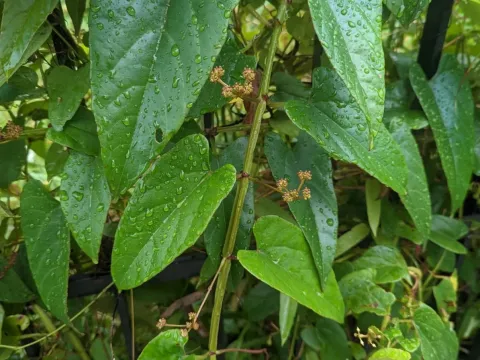
Cissus hastata
Cissus hastata
Cissus hastata is a vigorous evergreen climber belonging to the Vitaceae family. Native to tropical regions of Asia and Australia, it is well-known for its distinctive foliage and rapid growth habit in warm environments.
What the section contains
Cissus hastata
Successful cultivation requires a tropical climate with temperatures between 20°C and 28°C. The plant thrives in high-humidity environments and is intolerant to frost or cold drafts, which can cause significant tissue damage.
The ideal soil substrate for Cissus hastata is a well-draining, nutrient-rich mix. A composition of peat, perlite, and organic compost ensures proper aeration, which is essential for maintaining a healthy and extensive root system.
Light management is crucial; while the plant enjoys bright conditions, direct sunlight should be avoided to prevent foliar scorching. Partial shade or filtered light mimics its natural habitat under the forest canopy.
Watering should be consistent but cautious. The root zone must remain moist but never waterlogged, as poor drainage is the primary cause of physiological stress and root rot in this species.
Spider mites are the most common pests found on Cissus hastata, especially in indoor environments with low humidity. Regular misting and proper air circulation are recommended as primary deterrents against these mites.
Scale insects and mealybugs can also infest the stems and undersides of leaves. These pests weaken the plant by extracting sap, which may necessitate the use of targeted systemic insecticides if manual removal is insufficient.
Fungal diseases, such as root rot and leaf spot, are prevalent in poorly ventilated or excessively damp conditions. Improving airflow and reducing irrigation frequency are standard agrotechnical measures to prevent such outbreaks.
Botrytis (grey mold) can appear during extended periods of high humidity and low temperatures. This pathogen requires immediate sanitation, including the removal of infected plant parts and the application of appropriate fungicides.
Overall, a rigorous monitoring schedule is advised to identify early signs of infestation. Integrated Pest Management (IPM) practices, including biological controls, are highly effective for maintaining the vitality of Cissus hastata collections.