
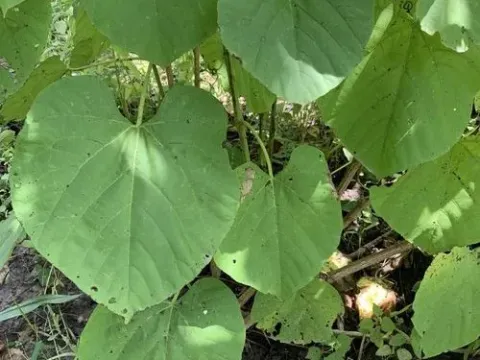
Cissus populnea
Cissus populnea
Cissus populnea is a robust climbing plant belonging to the Vitaceae family. Native to the tropical regions of West and Central Africa, this perennial liana is well-adapted to the warm and humid conditions of savanna-forest mosaic environments.
What the section contains
Cissus populnea
Successful cultivation requires well-drained, fertile soil, as the plant is highly susceptible to root rot in waterlogged conditions. It thrives best in sandy loam substrates that provide both sufficient aeration and consistent moisture retention to support its vigorous vegetative growth.
Climate requirements involve sustained warm temperatures, ideally between 22°C and 30°C. The plant is sensitive to frost and extreme temperature fluctuations, meaning it must be protected from cold drafts and sudden drops in night temperatures during the early establishment phase.
Botanically, the species is distinguished by its cordate leaves and flexible, woody stems that require support structures such as trellises or poles for optimal yield. Its extensive root system acts as a nutrient reservoir, allowing the plant to persist through seasonal dry spells.
Economically, Cissus populnea is highly valued in local agriculture. Its stems and roots are processed to extract mucilaginous compounds used as thickeners in traditional cuisine, and the plant remains a significant subject of research for its medicinal properties and potential applications in pharmaceutical industries.
The most common agricultural threats to Cissus populnea involve fungal pathogens, particularly those causing root rot, which are often exacerbated by poor field drainage and excessive humidity. Maintaining clean, weed-free planting rows is essential to promote air circulation around the base of the stems.
Pest management focuses primarily on controlling common tropical pests such as spider mites, aphids, and whiteflies. These insects can cause significant damage to the foliage, necessitating regular scouting and, when necessary, the application of targeted biological control agents to ensure high-quality production.