
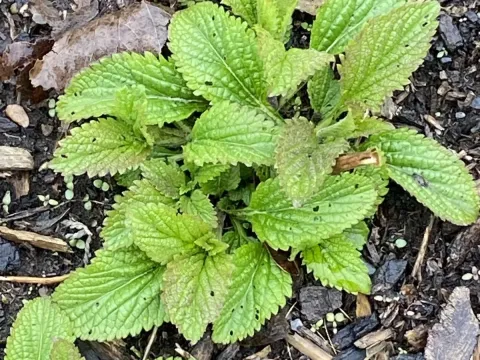
White vervain
Verbena urticifolia
White vervain (Verbena urticifolia) is a herbaceous perennial belonging to the Verbenaceae family, widely recognized for its ecological and medicinal properties.
What the section contains
White vervain
Sowing should take place in early spring once the soil has warmed up, as the seeds require consistent soil temperature to break dormancy and germinate effectively.
Pre-chilling or stratification of seeds is often recommended to improve the uniformity of seedlings, especially if the seeds have been stored for a long period.
For commercial production, precision seeding is performed to maintain optimal plant density, allowing for efficient mechanical weeding and harvest management throughout the season.
Seed depth should remain shallow, typically around 0.5 cm, as light exposure is often beneficial for the germination process of this specific species.
This species thrives in moist, fertile soils with a neutral pH, making it highly adaptable to a variety of loam-based textures common in agricultural fields.
White vervain prefers full sun exposure, although it can tolerate partial shade, provided the plant receives sufficient light to support its robust flowering stage.
Management of water levels is crucial; the plant requires consistent moisture but will not survive in waterlogged environments for extended periods during the winter.
Soil preparation should involve deep tilling and the incorporation of organic matter to support the strong root system developed by this perennial plant.
In terms of climate, the plant is hardy across various temperate zones, though it performs best in regions with mild summers and predictable rainfall patterns.
Powdery mildew represents the most frequent fungal challenge for this crop, particularly in dense stands where air circulation is restricted by poor spacing.
Aphids and spider mites are the primary insect threats that can reduce the yield of high-quality biomass by damaging tender apical leaves and stems.
Integrated pest management strategies focusing on biological controls are recommended to preserve the medicinal quality of the harvested plant tissue.
Crop rotation is essential to prevent the accumulation of soil-borne pathogens that thrive in the root zone of perennial Verbenaceae species.
Regular sanitation, including the removal of dead or dying plant debris at the end of the season, significantly lowers the risk of disease pressure in the following year.
The harvest cycle is timed to coincide with the peak flowering stage, which ensures that the concentrations of active chemical compounds remain at their maximum.
Mechanical harvesting units can be used to cut the upper portions of the plants, typically ensuring a stubble height that promotes healthy regrowth for the next season.
Drying processes must be carefully monitored, using shaded conditions or mechanical dryers set to low temperatures to prevent the loss of delicate volatile components.
High-quality dried biomass should show minimal leaf fragmentation and retain a vibrant color, indicating successful post-harvest management and processing.
Proper storage in dry, well-ventilated conditions is vital to maintain the product's shelf life and medicinal efficacy before it reaches the end user.