
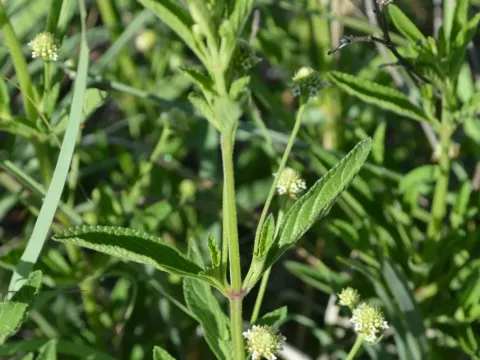
Lippia rehmannii
Lippia rehmannii
Lippia rehmannii is a perennial shrub species belonging to the Verbenaceae family. Originating from Southern Africa, it is well-adapted to warm, semi-arid environments that require specialized management in agricultural systems.
What the section contains
Lippia rehmannii
The plant features distinct morphology, including textured leaves and small, dense inflorescences. The most significant biological aspect of this culture is its high essential oil content, which is concentrated in glandular structures on the foliage.
Optimal growth conditions require full sun exposure and warm temperatures. As a drought-tolerant species, it performs best in regions where moisture can be controlled, ensuring that water supply is consistent but never excessive to prevent soil saturation.
Soils must be well-draining, with a preference for sandy loam compositions. Neutral to slightly acidic pH levels are considered ideal for root health, while heavy or compact soils should be avoided to prevent moisture retention and root decay.
Economic importance is centered on the production of volatile oils used in pharmaceutical and cosmetic sectors. Its aromatic properties make it a valuable crop for sustainable farming in arid regions where traditional high-water-demand crops are impractical.
The primary agronomic threat to Lippia rehmannii is the development of soil-borne fungal pathogens. Over-irrigation or lack of proper drainage often leads to root rot, which is a common cause of plant loss in commercial plantations.
Pests such as spider mites and various aphid species pose a threat by colonizing the tender parts of the plant. These insects can significantly reduce the photosynthetic capacity and the overall quality of the harvested essential oils.
Preventative management includes proper spacing between plants to maximize airflow, which naturally suppresses the proliferation of mold and mildew in the humid zones of the canopy.
Ongoing monitoring of the crop is essential to detect pest infestations at an early stage. Early intervention allows farmers to manage outbreaks without the need for large-scale chemical applications.
Integrated pest management strategies focusing on ecological balance are recommended to maintain the purity of the aromatic raw material and adhere to quality standards for the industry.