
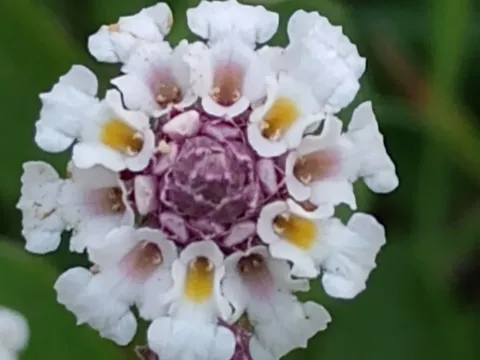
Lippia nodiflora
Lippia nodiflora
Lippia nodiflora is primarily propagated through vegetative cuttings or stolon sections. This ensures the preservation of varietal characteristics and allows for rapid establishment of groundcover.
What the section contains
Lippia nodiflora
Planting is best performed in the spring season when soil temperatures are consistently warm. Spacing between individual plugs usually ranges from 15 to 30 centimeters depending on the desired speed of coverage.
In warm-climate regions, planting can continue throughout the summer, provided that consistent irrigation is maintained to facilitate root development in the newly planted areas.
Seed propagation is possible but less common in commercial applications due to the slower establishment rate compared to vegetative methods. Seeds should be started in a controlled greenhouse environment.
Once established, the plant spreads via trailing stems that root at the nodes. This aggressive growth habit makes it an excellent choice for large-scale landscaping but requires occasional edge maintenance to control its spread.
As a member of the Verbenaceae family, Lippia nodiflora thrives in full sun exposure. While it can tolerate partial shade, insufficient light will result in leggy growth and reduced flowering density.
The plant is highly adaptable to various soil types, including sandy, loamy, and even slightly saline soils. However, it performs best in well-draining soil where waterlogging is minimized to prevent root issues.
Renowned for its extreme drought tolerance, this species is increasingly popular as a sustainable lawn alternative. Once deeply rooted, it requires significantly less water than traditional turfgrass.
The plant grows optimally in warm temperate to tropical climates. While it can survive mild frosts, prolonged freezing temperatures may lead to winter dieback, necessitating protective measures in cooler zones.
Regular maintenance involves light fertilization during the peak growing season to maintain a deep green color and promote flowering. Over-fertilization should be avoided to prevent excessive succulence and susceptibility to stress.
Lippia nodiflora is naturally resistant to most common garden pests, which contributes to its low-maintenance reputation in various landscape and agricultural applications.
The most significant threat to the health of the plant is poor soil drainage. Excessive moisture or stagnant water creates an environment prone to fungal pathogens and root rot diseases.
In humid conditions with low air circulation, the plant may occasionally attract aphids or spider mites. These are typically managed through proper canopy management and improved aeration.
Weed encroachment is a primary concern only during the initial establishment phase. Once the mat of foliage is fully formed, it creates a dense layer that effectively outcompetes most invasive weeds.
Regular inspection for signs of chlorosis or leaf spotting is advised. Maintaining a balance in irrigation and avoiding overhead watering in the late evening can significantly reduce the risk of disease outbreaks.