
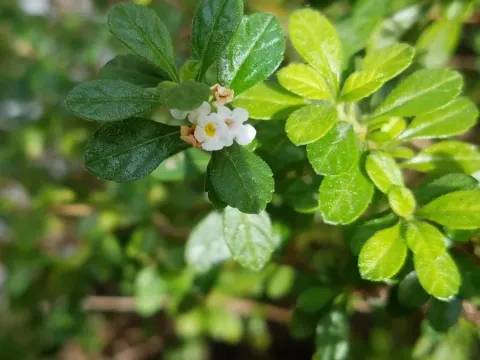
Lippia helleri
Lippia helleri
Lippia helleri is a perennial plant belonging to the Verbenaceae family. Originating from the tropical regions of Central America and the Caribbean, it thrives in warm climates and requires specific conditions to achieve high yield in agricultural settings.
What the section contains
Lippia helleri
Sowing should only occur when soil temperatures are consistently above +18°C. In regions with cooler springs, it is recommended to start the plants in a nursery or greenhouse to ensure they are robust enough for transplanting once the risk of cold is eliminated.
Propagation is commonly done through stem cuttings or seeds. Cuttings are preferred in commercial operations as they provide uniform growth and faster establishment. Proper spacing is essential to ensure adequate airflow between plants, which is vital for disease prevention.
Initial soil preparation involves tilling and the incorporation of organic matter to improve soil structure. Ensuring that the site is fully exposed to sunlight is crucial, as Lippia helleri is a heliophilic species that requires significant light for active development.
Careful planning of the planting cycle allows producers to take advantage of the peak growing season, ensuring the plants develop a deep root system capable of supporting heavy vegetative growth during the summer months.
Lippia helleri prefers well-drained, fertile sandy or loamy soils with a neutral pH level. Effective drainage is a non-negotiable requirement, as waterlogged conditions quickly lead to root rot and other physiological stressors that inhibit growth.
The plant is highly sensitive to frost and cold drafts. An environment that provides consistent warmth and high levels of solar radiation is ideal. If grown in sub-optimal light, the plant will fail to produce the necessary concentrations of secondary metabolites.
Water requirements are moderate, though consistent moisture must be maintained during the early growth stages. Once established, the plant becomes more resilient, but supplemental irrigation is necessary during dry spells to maintain high biomass production.
Fertilization regimes should prioritize nitrogen during the vegetative phase to boost leaf mass, transitioning to phosphorus and potassium-rich blends as the plant reaches maturity to support healthy flower development.
Field management requires routine inter-row cultivation to keep weed pressure low and soil aeration high. Compacted soil significantly limits the expansion of the root system, which in turn reduces the overall vigor of the crop.
The primary threats to Lippia helleri include fungal pathogens like powdery mildew, which thrive in conditions of high humidity and poor air circulation. Overcrowding in the field is a major factor that increases the vulnerability of the crop to these diseases.
Pests such as spider mites and thrips often appear in dry conditions. These insects target the foliage, causing stippling, discoloration, and reduced photosynthesis, which directly negatively impacts the harvestable quantity of the product.
Root-related issues, such as crown rot, are almost exclusively caused by over-irrigation or planting in heavy, clay-based soils that do not allow for rapid water evacuation after heavy rainfalls.
Preventative measures include the use of clean planting materials and rotating crops to avoid the accumulation of soil-borne pathogens. Monitoring programs are essential to detect infestations before they escalate to an economic injury level.
Using integrated pest management (IPM) practices, such as the introduction of beneficial insects or biological fungicides, allows for effective control while maintaining the quality standards required for pharmaceutical or culinary markets.
The harvest of Lippia helleri is timed with the peak of the flowering phase. This is when the essential oils and active chemical compounds are at their highest concentration in the aerial parts of the plant.
Mechanical or manual harvesting involves cutting the stems approximately 10–15 centimeters above the ground. The plant's ability to regenerate means that under optimal management, multiple cuts can be performed in a single season.
Post-harvest handling focuses on preventing the degradation of volatile aromatic compounds. Drying should be conducted in shaded, well-ventilated structures to ensure the material loses moisture without cooking or exposure to direct ultraviolet radiation.
Economic utility ranges from the extraction of high-value essential oils for the fragrance industry to dried foliage used in herbal beverages and traditional medicine preparations.
Storage of the processed crop must occur in moisture-proof and light-shielded containers. This ensures the integrity of the bioactive components, allowing for shelf life stability of up to two years without significant quality loss.