
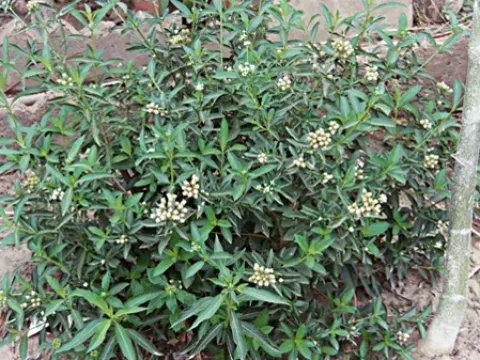
Lippia chevalieri
Lippia chevalieri
Lippia chevalieri is a perennial subshrub belonging to the Verbenaceae family. Native to the tropical regions of West Africa, this plant is well-adapted to high temperatures and long hours of daylight, which are essential for its vigorous growth.
What the section contains
Lippia chevalieri
The plant thrives in well-drained, sandy loam soils that are rich in organic matter. Proper soil structure is vital, as the root system of Lippia chevalieri is susceptible to rot if subjected to waterlogging or anaerobic conditions.
Climate-wise, it requires a tropical or subtropical environment. It is highly sensitive to frost, which limits its outdoor cultivation to frost-free regions. For optimal oil yield, plants should be grown in locations with stable temperatures between 22°C and 32°C.
Agricultural management includes regular irrigation, particularly during the initial stages of establishment. However, once the plant is well-rooted, it shows moderate drought tolerance, though yield potential is highest when water availability remains constant.
Its primary use is in the production of essential oils, flavoring for beverages, and as a natural ingredient in soaps and perfumes. The chemical profile of the oil is rich in specific terpenoids that provide its distinct aroma and therapeutic properties.
Harvesting is typically performed by hand or using mechanical trimmers at the peak of the flowering stage. At this developmental phase, the secondary metabolites, responsible for the aromatic properties, reach their highest concentration in the leaves.
Post-harvest handling is critical to ensure the preservation of volatiles. The foliage should be dried in a controlled environment, away from direct sunlight, at temperatures that do not degrade the thermolabile aromatic compounds.
If the goal is oil extraction, the biomass is usually processed shortly after harvest using steam distillation. Rapid processing reduces the loss of volatile fractions that could evaporate during extended storage of fresh material.
Standard quality control involves monitoring the moisture content of the dried product, which should ideally be kept below 10% to prevent microbial growth and chemical degradation during storage.
Proper scheduling of harvests can maximize annual biomass production. With adequate fertilization and spacing, producers can achieve multiple harvests throughout the growing season, significantly improving the economic efficiency of the crop.