
Lippia javanica
Lippia javanica
Lippia javanica, commonly known as fever tea or wild tea, is a perennial shrub belonging to the Verbenaceae family. It is native to Southern and Eastern Africa, where it thrives in diverse savanna and grassland ecosystems.
What the section contains
Lippia javanica
The plant requires full sun exposure for the optimal production of essential oils. It grows well in various soil types, provided there is excellent drainage, as the species is highly sensitive to waterlogged conditions that lead to root rot.
Regarding climate, Lippia javanica prefers warm, temperate to tropical conditions. While it is somewhat drought-tolerant once established, supplemental irrigation during peak growth periods significantly improves leaf biomass yield.
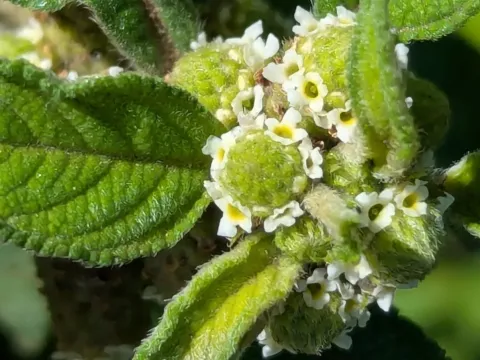
Botanically, it is characterized by its woody base, simple wrinkled leaves, and dense, white to cream-colored flower heads. The leaves are rich in bioactive compounds, including piperitenone and linalool, which give it a distinct lemony fragrance.
In agricultural practice, it is cultivated primarily for its medicinal properties and as a source of high-quality aromatic oils. It is often harvested for use in traditional medicine to treat respiratory issues and as a natural herbal tea.
The primary agricultural threats to Lippia javanica include fungal pathogens that thrive in high humidity. Root decay is the most common issue if the soil remains excessively moist for prolonged periods.
Pests that frequently infest these crops include spider mites and aphids. These insects tend to colonize the undersides of leaves, particularly when the plants are grown in sheltered or poorly ventilated environments.
Management strategies focus on preventive measures. Implementing a drip irrigation system ensures water reaches the roots without wetting the foliage, which significantly reduces the risk of fungal leaf spot diseases.
Regular sanitation, such as the prompt removal of infected plant debris, is crucial to prevent the spread of diseases within a plantation. Pruning also helps improve air circulation through the canopy.
Organic pest management using botanical extracts or biological control agents like predatory mites is highly effective and helps maintain the purity of the crop for medicinal markets.