
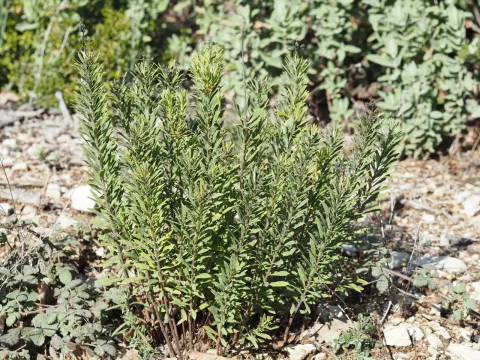
Daphne gnidium
Daphne gnidium
Daphne gnidium, commonly known as flax-leaved daphne, is a species of evergreen shrub belonging to the Thymelaeaceae family. It is native to the Mediterranean region, extending across Southern Europe and North Africa, where it thrives in scrublands and dry, sunny rocky slopes.
What the section contains
Daphne gnidium
This species requires well-drained, alkaline to neutral soil to prevent root rot, which is its most significant cultural failure point. While it is highly drought-tolerant once established, it prefers full sun or light shade and performs best in climates that mimic its native Mediterranean environment.
The plant features narrow, dark green leaves and clusters of highly fragrant, small white or cream-colored flowers that bloom in summer. It adds significant ornamental value to landscapes, especially in rock gardens or xeriscaping projects, due to its resilient nature and pleasant scent.
Propagation is primarily achieved through cuttings, as seed germination can be slow and requires specific stratification periods. In nursery settings, providing a fast-draining potting medium is essential for young plants to develop a strong root system before transplantation to a permanent location.
Regarding its utility, the plant is purely ornamental; it is not a food crop and is notably toxic. All parts of the plant, including its berries, contain daphnetoxin and should be handled with care. Its use is restricted to landscape design, where its structure and fragrance can be appreciated safely.
The main pathological threats to Daphne gnidium involve fungal pathogens, particularly Phytophthora and other soil-borne fungi that flourish in waterlogged conditions. These pathogens can cause rapid collapse of the plant due to root system deterioration.
Pest pressure is relatively low compared to other shrubs, but aphids and spider mites can infest tender shoots during the dry season. These pests can be effectively managed with insecticidal soaps or neem oil, provided they are applied during the cooler parts of the day.
Preventative measures are the best defense against threats. This includes avoiding overhead irrigation, which keeps foliage wet and promotes fungal growth. Ensuring that the planting site has excellent drainage is the single most important factor in keeping the plant disease-free.
Environmental stress, such as extreme cold or prolonged humidity, can also leave the plant vulnerable to secondary infections. Regular monitoring for signs of wilt or leaf spots is recommended to catch infections before they become systemic.
Good cultural practices, such as proper spacing for air circulation and judicious pruning of dead wood, help maintain plant vigor. By keeping the plant healthy, it remains naturally more resistant to the common pests and diseases found in Mediterranean gardens.