
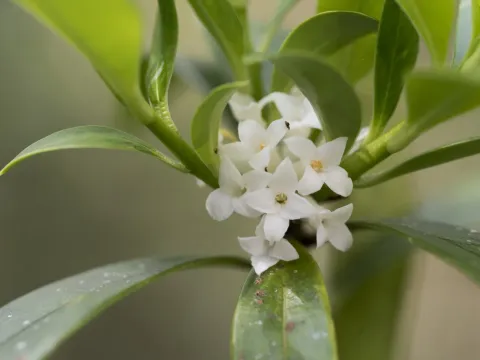
Daphne kiusiana
Daphne kiusiana
Daphne kiusiana is a woody evergreen or semi-evergreen shrub belonging to the Thymelaeaceae family. Native to the mountainous regions of East Asia, particularly Japan, this species is highly valued in horticulture for its dense growth and attractive foliage.
What the section contains
Daphne kiusiana
The cultivation of this plant requires specific environmental conditions, primarily partial shade and shelter from intense midday sun. It thrives in well-drained, humus-rich soil with a slightly acidic to neutral pH level to ensure healthy root development.
Proper water management is critical for the survival of Daphne kiusiana. The soil must remain consistently moist but never waterlogged, as excessive moisture often leads to root rot, which is a common fatal issue for this genus.
Maintenance includes light pruning to maintain shape and the removal of dead wood. Since the species is slow-growing, it is ideal for small gardens, containers, or shaded borders where space is limited and long-term structure is desired.
For ornamental use, this shrub serves as an excellent focal point in woodland gardens or understory planting schemes. Its compact habit and relative ease of maintenance, provided the drainage is adequate, make it a sophisticated choice for temperate climate gardeners.
The primary threats to the health of Daphne kiusiana are fungal infections such as root rot (Phytophthora) and Botrytis, typically triggered by poor drainage or overly humid environmental conditions. Ensuring proper air circulation is essential for disease prevention.
Pest issues often include aphids and spider mites, which can proliferate during periods of drought or stress. Regular monitoring and the application of appropriate horticultural oils or insecticidal soap are recommended to manage these threats and preserve plant health.