
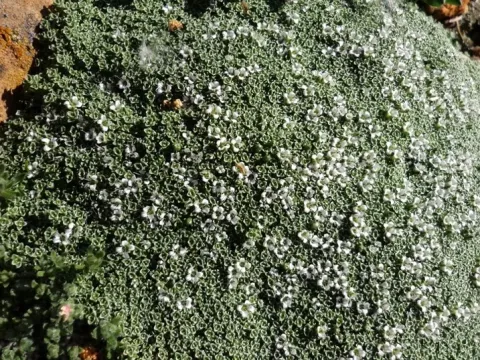
Daphne jasminea
Daphne jasminea
Daphne jasminea is a distinct, low-growing evergreen shrub belonging to the Thymelaeaceae family. It is endemic to the mountainous regions of Greece, particularly the island of Crete, where it naturally occupies rocky crevices, demonstrating a remarkable resilience to harsh environments.
What the section contains
Daphne jasminea
Botanically, this species is noted for its compact growth habit and its fragrant, jasmine-like flowers that appear in small clusters. Its foliage consists of small, thick, leathery leaves that are arranged densely, contributing to the plant's tidy appearance throughout the year.
Successful cultivation of Daphne jasminea depends heavily on replicating its native limestone habitat. The soil must be highly permeable, alkaline, and rich in mineral content. Gardeners should prioritize inorganic substrates like grit or gravel to ensure the roots remain healthy and well-oxygenated.
Climate management is crucial; the plant requires a sunny location but generally appreciates protection from the intense heat of midday during peak summer. Proper air circulation is mandatory to prevent the build-up of moisture, which is the primary cause of decline in this species.
In terms of agricultural and horticultural use, this plant is strictly ornamental, favored by enthusiasts of alpine and rock garden design. It is considered a collector's plant due to its slow growth rate and the specific technical knowledge required for its long-term survival in garden settings.
The primary threats to Daphne jasminea are root-rot pathogens induced by poor drainage. In addition, pests such as aphids or spider mites can occasionally affect the plant in greenhouses or enclosed environments, necessitating careful monitoring and early intervention.