
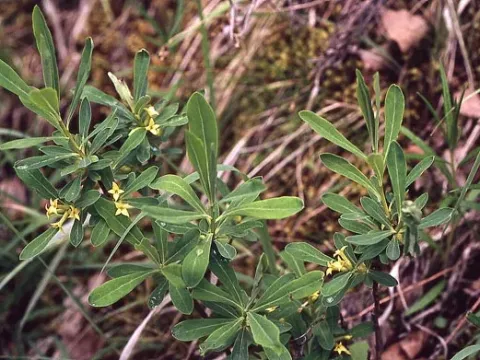
Daphne giraldii
Daphne giraldii
Daphne giraldii is a deciduous shrub belonging to the Thymelaeaceae family. Originating from the mountainous regions of China, this species is highly valued for its elegant, slender habit and its ability to produce clusters of fragrant yellow flowers during the early spring season.
What the section contains
Daphne giraldii
The plant grows as a small, upright shrub with narrow, lance-shaped leaves. In autumn, the foliage transitions to a vibrant yellow, providing a second season of visual interest in the landscape. It is widely considered a botanical rarity among shrub enthusiasts.
Successful cultivation requires soil that is rich in organic matter and offers exceptional drainage. The root system of this species is extremely sensitive to waterlogging, which often leads to rapid decline, making the selection of a well-draining site non-negotiable.
Daphne giraldii thrives best in partial shade to full sunlight, provided the site is sheltered from harsh, drying winds. It prefers a neutral to slightly alkaline soil pH, which mimics the natural conditions found in its native mountain habitats.
Maintenance involves minimal intervention. It is a slow-growing shrub and generally resents disturbance or heavy pruning. Mulching the base of the plant is recommended to keep the roots cool and moist during the heat of the summer months.
The primary threats to the health of this shrub are soil-borne fungal pathogens, specifically those causing root rot. Ensuring that the planting site is elevated or properly amended with grit can significantly reduce the risk of infection.
Pests such as aphids and leaf rollers may occasionally target new growth. Integrated pest management, focusing on early detection and physical removal, is usually preferred over aggressive chemical applications to avoid damaging the plant's delicate tissues.
Foliar diseases, including leaf spots, can occur if there is insufficient air circulation around the shrub. Proper spacing between plants is essential to maintain a healthy microclimate and prevent the accumulation of humidity on the foliage.
Maintaining balanced nutrient levels is crucial; however, over-fertilization should be avoided as it can promote succulent growth that is more susceptible to frost damage and pest infestation during the transition seasons.
Always handle this plant with caution, as it is toxic if ingested and the sap may cause skin irritation upon contact. Protective gloves should be worn whenever performing maintenance or pruning tasks to ensure complete safety.