
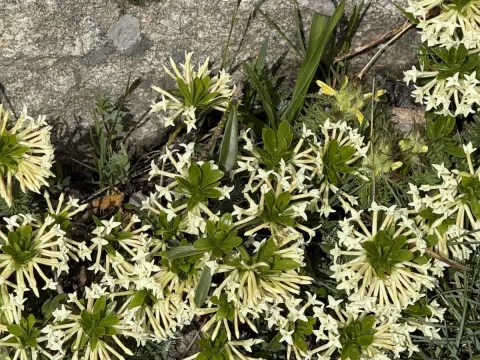
Daphne glomerata
Daphne glomerata
Daphne glomerata is a compact evergreen shrub belonging to the Thymelaeaceae family. It is naturally occurring in the high-altitude regions of the Caucasus, where it thrives in conditions characterized by cool temperatures and excellent drainage systems.
What the section contains
Daphne glomerata
The plant requires a loose, well-drained soil rich in organic matter. A neutral or slightly alkaline pH level is ideal for the successful growth of this species. It is crucial to ensure that the site does not have heavy or clay-based soil, which might cause water accumulation.
Regarding climate requirements, this culture prefers partial shade, especially during the hottest part of the day. In harsh climates, protection from freezing winds during winter is essential to maintain the vitality of the plant and prevent severe damage to the foliage.
Agricultural management of Daphne glomerata focuses on precision watering. It requires consistent moisture levels, but it is extremely intolerant of waterlogging, which can quickly lead to lethal root decay. Irrigation should be applied at the base of the plant.
It is mandatory to handle this plant with caution, as all parts of Daphne glomerata contain toxic alkaloids. Gardeners should always wear gloves during pruning or soil preparation to avoid skin irritation or accidental ingestion of plant sap.
Fungal infections represent the primary threat to the health of Daphne glomerata. These pathogens usually proliferate in poorly ventilated areas or under conditions of excessive moisture, leading to outbreaks of grey mold or leaf spotting diseases.
Root rot is a critical risk factor caused by improper moisture management. If the drainage capacity of the growing medium is insufficient, the root system loses its ability to breathe, leading to rapid decay that is often irreversible by the time symptoms become visible.
Aphids are the most common insect pests affecting this shrub. They tend to cluster on young, succulent growth, consuming the sap and potentially acting as vectors for various viral diseases that weaken the overall structure and growth rate of the plant.
During periods of extreme heat and dry weather, the plant may become susceptible to spider mite infestations. These pests suck the moisture from the leaves, causing them to yellow and wilt, which necessitates the use of specialized acaricide treatments.
Good horticultural hygiene is the best defense against threats. Regularly removing dead or diseased branches, ensuring adequate spacing between plants for airflow, and monitoring the foliage for signs of pest activity are vital practices for every grower.