
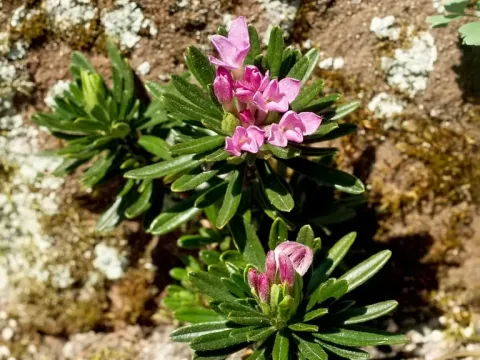
Daphne arbuscula
Daphne arbuscula
Daphne arbuscula is a small, evergreen shrub belonging to the Thymelaeaceae family. In its natural habitat, it is an endemic species from the mountainous regions of Slovakia, typically found growing on limestone rock crevices.
What the section contains
Daphne arbuscula
The culture has specific requirements for the substrate: the soil must be well-drained, rocky, and neutral to slightly alkaline. The plant is extremely sensitive to waterlogging, which can easily trigger root rot and compromise the shrub's health.
For successful growth, the shrub needs a sunny or semi-shaded location. In hot climates, providing shade during the hottest hours of the day is essential to prevent leaf scorching and excessive moisture loss.
A stable temperature regime is crucial for development. While Daphne arbuscula is known for its frost resistance, light winter protection is recommended during snowless winters to shield the plant from desiccating winds.
Agronomic maintenance involves moderate watering during dry spells. Since the plant grows slowly, it does not require frequent pruning, only basic sanitary maintenance in early spring to remove damaged stems.
Fungal diseases caused by excessive humidity pose the greatest threat to Daphne arbuscula. These include various types of root rot, which, if watering practices are not managed correctly, can be fatal to the plant.
In densely planted areas, powdery mildew may appear, manifesting as a whitish fungal layer on the leaves. Prevention relies on ensuring adequate air circulation around the shrub to maintain dry foliage.
Pests such as aphids and spider mites may infest the plant, feeding on the sap of young shoots. Targeted insecticides should be applied during the active growing season to manage these populations effectively.
It is important to note that all parts of the plant contain toxic substances (diterpenoids). Protective gloves must be worn during all horticultural activities to prevent skin contact with the plant sap.
Routine inspection of the shrub for changes in leaf color or spot development allows for the early detection and management of potential health issues, ensuring the plant retains its ornamental appeal.