
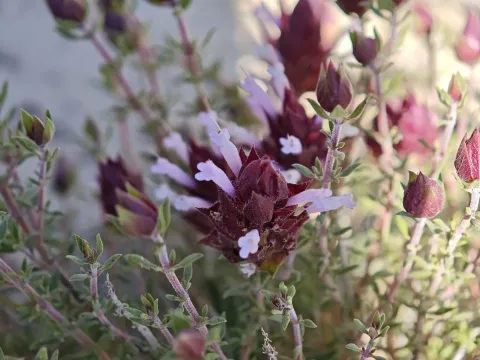
Thyme
Thymus cephalotos
Thymus cephalotos, commonly known as a type of thyme, belongs to the Lamiaceae family. This perennial species is native to the Iberian Peninsula, where it thrives in rocky and sun-exposed habitats, showcasing its natural adaptation to harsh, Mediterranean-like environments.
What the section contains
Thyme
The plant requires full sun exposure and well-drained, sandy, or rocky soil with a neutral to alkaline pH. Poor drainage is the most significant factor leading to plant mortality, as the root system is highly susceptible to rot when exposed to excessive moisture.
In terms of agricultural management, Thymus cephalotos is relatively low-maintenance once established. It does not tolerate heavy competition from weeds, so early-stage weed control is essential for ensuring healthy growth and proper canopy development.
This species is highly drought-tolerant, utilizing its dense, cushion-like structure to preserve soil moisture. It is well-adapted to temperature fluctuations, making it a robust candidate for cultivation in varied climatic conditions within its hardiness range.
Economically, this plant is cultivated for its high-quality essential oils used in the pharmaceutical, cosmetic, and food industries. Its aromatic leaves provide a distinct flavor, making it a sought-after ingredient in high-end culinary applications.
Fungal diseases are the primary threat to thyme plantations, especially when cultivation occurs in environments with high humidity or poor soil aeration. Root rot and blight are the most common issues that can rapidly degrade a commercial crop.
Insect pests, such as aphids and leaf miners, can cause damage to the foliage, reducing both the aesthetic quality and the essential oil content of the crop. Spider mites are also a common issue during particularly hot and dry periods.
Preventive measures include maintaining proper plant spacing to facilitate air circulation, which helps keep the foliage dry. Avoid over-irrigation, as moisture management is the most effective tool in disease prevention.
Integrated pest management (IPM) is strongly recommended to protect both the crop and beneficial insects like bees. Biological control agents should be favored over synthetic chemical pesticides whenever possible.
Regular field scouting is necessary to identify localized outbreaks of pests or diseases. Prompt removal and destruction of infected plants can help stop the spread of pathogens throughout the entire plantation.
Harvesting is ideally performed during the peak flowering stage. This is when the plant displays the highest concentration of volatile aromatic compounds, ensuring the best quality for commercial extraction.
The stems are cut several centimeters above the ground to allow for plant regeneration. It is critical to harvest during dry weather to prevent microbial spoilage of the plant material during the initial stages of post-harvest handling.
Once harvested, the plant material must be transported and dried quickly. Drying should take place in a shaded, well-ventilated environment to prevent the degradation of essential oils and to preserve the natural green color of the leaves.
After the drying process is complete, the herb is cleaned and sorted to remove stems and impurities. Packaging in airtight, light-resistant containers is essential to maintain the quality and shelf-life of the final product.
Commercial plantations of Thymus cephalotos are typically productive for several seasons. Following good agricultural practices, producers can expect consistent yields of high-quality aromatic biomass year after year.