
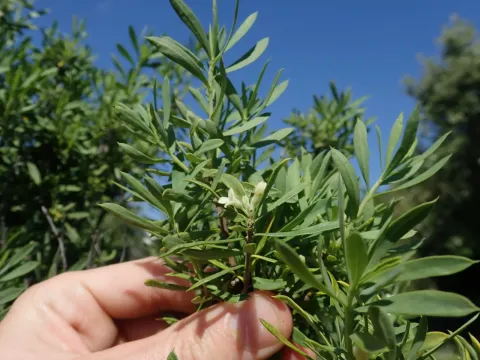
Daphne gnidioides
Daphne gnidioides
Daphne gnidioides is a perennial shrub belonging to the Thymelaeaceae family. It is native to the Mediterranean region, particularly thriving in Greece and nearby Aegean islands, where it is found in rocky habitats and calcareous soils.
What the section contains
Daphne gnidioides
Botanically, the plant is distinguished by its narrow, lanceolate leaves and clusters of fragrant, white-to-creamy flowers. It is adapted to survive in harsh, sun-drenched environments with minimal soil moisture, displaying remarkable drought tolerance once established.
The climatic requirements for this shrub include a preference for mild temperatures and excellent drainage. It does not perform well in waterlogged soil; therefore, selecting a site with proper slope or constructing a raised bed is essential for success in cultivation.
Soil composition should ideally mimic its native habitat: gritty, alkaline, and low in rich organic matter. Over-fertilization should be strictly avoided to prevent weak growth and to maintain the plant's natural, compact form.
In terms of usage, Daphne gnidioides serves primarily as a decorative element in Mediterranean-style gardens or rockeries. Due to the inherent toxicity of all parts of the plant, it requires careful handling during pruning and maintenance, always using protective equipment.
The most critical threat to this species is root rot, typically caused by excessive humidity or poor soil drainage, which often proves fatal to the plant.
Aphids can frequently colonize new shoots, particularly in the spring, leading to distorted growth and potentially spreading viral infections if left untreated.
Fungal leaf spot diseases may appear during seasons of prolonged rain, necessitating a change in the microclimate around the plant to improve airflow.
Soil-borne pathogens represent a significant risk, which is why preventative soil treatment is highly recommended before initial planting.
To keep the plant healthy, a regimen of regular inspections and the application of targeted treatments at the first sign of distress is necessary.