
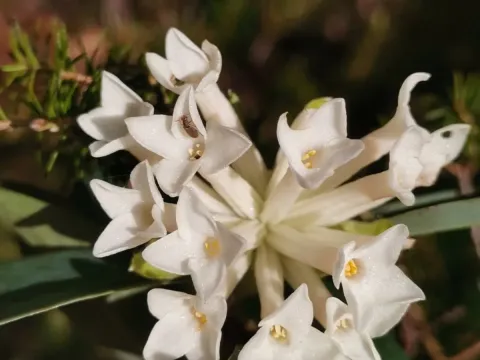
Daphne blagayana
Daphne blagayana
Daphne blagayana, commonly known as Blagay's daphne, is a species of evergreen prostrate shrub belonging to the Thymelaeaceae family. It is native to the Balkan Peninsula, where it thrives in rocky mountainous habitats and forest edges, showcasing its adaptation to cool, high-altitude conditions.
What the section contains
Daphne blagayana
This shrub is characterized by its low, spreading habit, rarely exceeding 30 cm in height. The foliage is composed of leathery, deep green leaves clustered at the tips of the shoots, providing a dense and uniform appearance throughout the growing season.
The cultural success of this plant depends on its specific soil preferences. It requires a well-drained, porous, and slightly acidic to neutral substrate. Excellent drainage is non-negotiable, as the plant is highly susceptible to root rot in waterlogged conditions.
In terms of light, Daphne blagayana performs best in partial shade or positions protected from harsh afternoon sun. It naturally grows in environments with dappled light, making it a perfect candidate for specialized rock gardens and alpine beds.
The plant is highly valued for its ornamental potential. Its early spring flowers, which are fragrant and white to cream-colored, appear in terminal heads, creating an attractive focal point in landscape design projects focused on mountain-themed horticulture.
Root rot is the most significant threat to the health of this species. It is usually triggered by inadequate drainage or over-irrigation, leading to the rapid decline of the plant's root system, which is delicate and slow to recover.
Pests such as aphids and spider mites may infest the plant during hot and dry spells. Regular inspection and the use of appropriate contact or systemic insecticides are recommended to maintain plant vigor throughout the summer months.
Gardeners must exercise caution when handling the plant, as all parts contain toxins. Direct contact with the sap can cause severe skin irritation and dermatitis, so gloves are strictly required for any pruning or transplanting activities.
Good cultural hygiene is essential to prevent disease outbreaks. Removing dead foliage and ensuring adequate air circulation around the crown of the plant helps to reduce the incidence of fungal pathogens that thrive in stagnant air.
Overwintering requires attention to moisture levels. While the plant is hardy in temperate climates, excessive winter wetness around the base can be as damaging as deep frost, highlighting the importance of proper site elevation.