
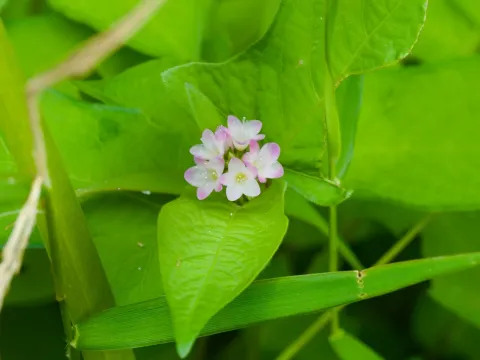
Thunberg's knotweed
Polygonum thunbergii
Thunberg's knotweed (Persicaria thunbergii, syn. Polygonum thunbergii) is a herbaceous plant belonging to the Polygonaceae family. It is recognized for its vigorous growth habit and utility as a ground cover in moist, shaded environments.
What the section contains
Thunberg's knotweed
Originating from East Asia, this species thrives in climates with consistent moisture. It is particularly well-suited for areas near water features or in woodlands where soil moisture levels remain high throughout the growing season.
The botanical structure of the plant includes creeping stems that root at the nodes upon contact with soil. The leaves are distinctively arrow-shaped, often displaying a dark central marking, contributing to its aesthetic value in landscaping.
To achieve optimal growth, the crop requires fertile, humus-rich soil. While it is adaptable, it performs best when the substrate is kept consistently moist but well-drained, avoiding both prolonged drought and total waterlogging.
Agricultural and horticultural utilization includes using the plant for slope stabilization and suppressing competitive weed growth. Its ability to create a dense vegetative mat makes it an effective ecological solution for covering bare surfaces in shady gardens.
Although resilient, the plant is susceptible to fungal diseases such as powdery mildew, especially when planted in areas with poor air circulation or excessive humidity trapped within the canopy.
Pests such as aphids and various leaf-eating insects can cause damage during the peak of the growing season. In damp, shady conditions, slugs and snails may also pose a threat to the succulent young foliage.
Maintenance of plant health involves regular monitoring for signs of stress or infestation. Ensuring proper spacing between plants helps to reduce the risk of disease outbreaks caused by stagnant air.
- Avoid overhead watering during peak sun hours to prevent leaf scorching.
- Implement integrated pest management (IPM) to control outbreaks without harsh chemicals.
- Prune back excessively dense areas to promote healthy new growth.
Proper sanitation, including the removal of dead or dying plant debris, is essential for maintaining the overall vigor of the crop and preventing the carry-over of pathogens between seasons.