

Reference · Crops
Solanaceae
The Solanaceae (Nightshade) family represents one of the most economically significant plant families in global agriculture. This group includes staple crops such as potatoes, tomatoes, peppers, and eggplants. These plants are characterized by a diverse range of growth forms, spanning from annual herbs to woody shrubs, all playing a vital role in human nutrition.
426
sections
What the section contains
 Cestrum endlicheri
Cestrum endlicheri
Cestrum endlicheri
 Cestrum fasciculatum
Cestrum fasciculatum
Cestrum fasciculatum
 Cestrum hediundinum
Cestrum hediundinum
Cestrum hediundinum
 Cestrum intermedium
Cestrum intermedium
Cestrum intermedium
 Cestrum latifolium
Cestrum macrophyllum
Cestrum macrophyllum
Cestrum latifolium
Cestrum latifolium
Cestrum macrophyllum
Cestrum macrophyllum
 Cestrum pallidum
Cestrum pallidum
Cestrum pallidum
 Cestrum pedicellatum
Cestrum pedicellatum
Cestrum pedicellatum
 Cestrum strigillatum
Cestrum strigillatum
Cestrum strigillatum
 Chaco chili
Capsicum chacoense
Chaco chili
Capsicum chacoense
 Chamaesaracha
2 items
Chamaesaracha
Chamaesaracha
2 items
 Chilean Lycium
Lycium chilense
Chilean Lycium
Lycium chilense
 Cinnamon nightshade
Solanum cinnamomeum
Cinnamon nightshade
Solanum cinnamomeum
 Clammy groundcherry
Physalis heterophylla
Clammy groundcherry
Physalis heterophylla
 Commerson's nightshade
Solanum commersonii
Commerson's nightshade
Solanum commersonii
 Cut-leaf nightshade
Solanum triflorum
Cut-leaf nightshade
Solanum triflorum
 Cutleaf nightshade
Solanum trifolium
Cutleaf nightshade
Solanum trifolium
 Cyphanthera
1 item
Cyphanthera
Cyphanthera
1 item
 Cyphomandra
3 items
Cyphomandra
Cyphomandra
3 items
 Datura ferox
Datura ferox
Datura ferox
 Datura hybrid
s
Datura hybrid
Datura hybrids
 Datura rosei
Datura rosei
Datura rosei
 Day-blooming cestrum
Cestrum diurnum
Day-blooming cestrum
Cestrum diurnum
 Deprea
2 items
Deprea
Deprea
2 items
 Desert henbane
Hyoscyamus desertorum
Desert henbane
Hyoscyamus desertorum
 Desert raisin
Solanum esuriale
Desert raisin
Solanum esuriale
 Desert thorn-apple
Datura discolor
Desert thorn-apple
Datura discolor
 Desert tobacco
Nicotiana obtusifolia
Discopodium
Discopodium
1 item
Desert tobacco
Nicotiana obtusifolia
Discopodium
Discopodium
1 item
 Duboisia
3 items
Duboisia
Duboisia
3 items
 Duboisia hopwoodii
Duboisia hopwoodii
Duboisia hopwoodii
 Dunalia
1 item
Dunalia
Dunalia
1 item
 Dyssochroma
1 item
Dyssochroma
Dyssochroma
1 item
 Eared Cestrum
Cestrum auriculatum
Eared Cestrum
Cestrum auriculatum
 Elliptic potato bush
Solanum ellipticum
Elliptic potato bush
Solanum ellipticum
 Espadaea
1 item
Espadaea
Espadaea
1 item
 European boxthorn
Lycium europaeum
European boxthorn
Lycium europaeum
 Fabiana
Fabiana
Fabiana
 Florida groundcherry
Physalis floridana
Florida groundcherry
Physalis floridana
 Forest tobacco
Nicotiana sylvestris
Forest tobacco
Nicotiana sylvestris
 Forked nightshade
Solanum furcatum
Forsskal's nightshade
Solanum forskalii
Fragrant nightshade
Solanum odoriferum
Forked nightshade
Solanum furcatum
Forsskal's nightshade
Solanum forskalii
Fragrant nightshade
Solanum odoriferum
 Fragrant nightshade
Solanum suaveolens
Fragrant nightshade
Solanum suaveolens
 Galapagos pepper
Capsicum galapagoense
Galapagos pepper
Capsicum galapagoense
 Giant Groundcherry
Physalis maxima
Giant Groundcherry
Physalis maxima
 Giant potato creeper
Solanum grandiflorum
Giant potato creeper
Solanum grandiflorum
 Giant Potato Creeper
Solanum wendlandii
Giant Potato Creeper
Solanum wendlandii
 Goetzea elegans
Goetzea elegans
Goetzea elegans
 Golden henbane
Hyoscyamus aureus
Golden henbane
Hyoscyamus aureus
 Grabowskia
1 item
Grabowskia
Grabowskia
1 item
 Grey boxthorn
Lycium cinereum
Grey boxthorn
Lycium cinereum
 Hairy nightshade
Solanum villosum
Hairy nightshade
Solanum villosum
 Hairy nightshade
Solanum physalifolium
Hairy nightshade
Solanum physalifolium
 Hairy nightshade
Solanum sarrachoides
Hairy nightshade
Solanum sarrachoides
 Heart-leaf nightshade
Solanum cardiophyllum
Heartleaf nightshade
Solanum cordatum
Heart-leaf nightshade
Solanum cardiophyllum
Heartleaf nightshade
Solanum cordatum
 Henbane
Hyoscyamus
2 items
Henbane
Hyoscyamus
2 items
 Henderson's nightshade
Solanum hendersonii
Henderson's nightshade
Solanum hendersonii
 Heterodox nightshade
Solanum heterodoxum
Heterodox nightshade
Solanum heterodoxum
Marketplace
Products in this section · 12
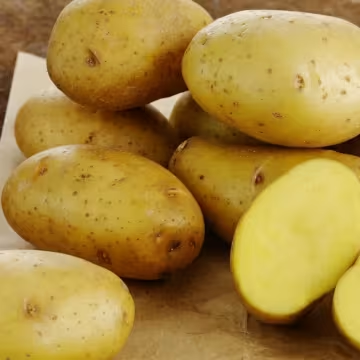
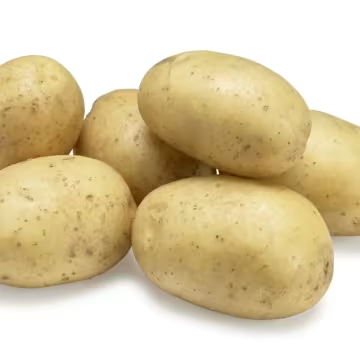
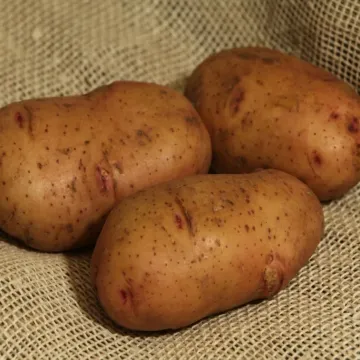

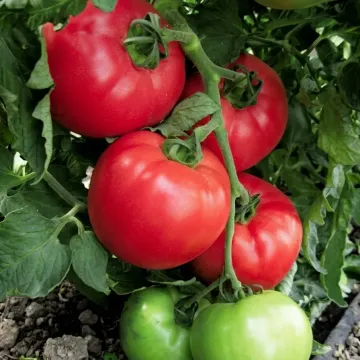
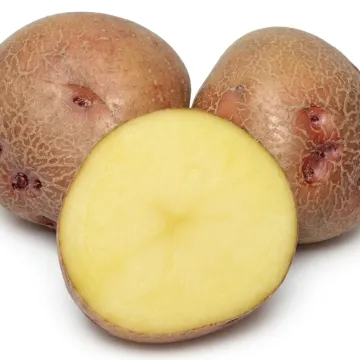

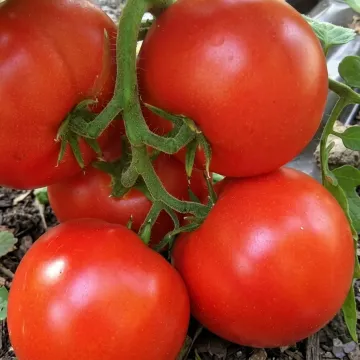
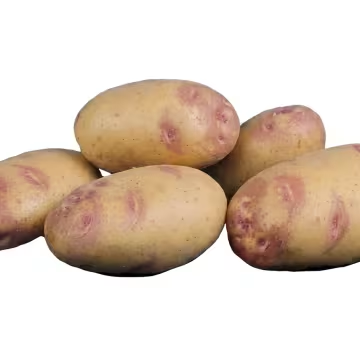
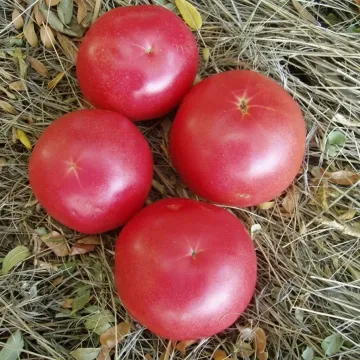

Solanaceae
Originating primarily in the Americas, these crops have been domesticated and distributed worldwide over the past several centuries. They are now cultivated across a wide range of climates, though they are primarily warm-season crops that require frost-free periods to reach full maturity and maximize yields effectively.
Botanically, members of the Solanaceae family are recognized by their alternate leaves and typically five-petaled flowers, which are often star-shaped. The fruit structures vary, ranging from fleshy berries to dry capsules. Agronomically, the presence of specific alkaloids, such as solanine, is a defining trait that influences plant physiology and breeding objectives.
Optimal growth for nightshade crops depends on well-drained, fertile soil with a slightly acidic to neutral pH. They require significant amounts of sunlight and consistent moisture levels throughout the growing season. Proper site selection and crop rotation are essential practices to manage soil health and prevent the buildup of soil-borne pathogens that thrive on these specific hosts.
In industrial and small-scale farming, management of diseases like late blight and pests such as the Colorado potato beetle is critical. Farmers employ a combination of cultural practices, biological controls, and chemical applications to protect their yields. Continuous research in breeding resistant varieties remains the primary strategy for ensuring sustainable production within this valuable family.
- Requires intensive nutrient management for optimal fruit set.
- High sensitivity to extreme heat and prolonged cold spells.
- Strategic use of trellis systems for vining varieties like tomatoes.